
The guide separates casino operators from game providers and explains why visible listings or old pages may not confirm current availability.
Barcrest Slots in the UK: What You Can Actually Verify
Barcrest is a name many players associate with traditional fruit-machine-style play, and it is easy to assume that a casino showing the name must have a matching collection of online slots. I would not make that jump. For UK players, the sensible question is not simply whether a website uses the Barcrest name. It is whether the operator, the game supplier and the individual title can all be identified and checked.
That makes claims about the “best Barcrest casinos” or a definitive ranking of Barcrest online slots something to treat carefully. A polished lobby, a review page or a search result can look convincing without proving that the advertised game is available to you.
I have made this mistake myself with casino software. A provider badge looked like a guarantee that the games were there. It was not. Providers can change, lobbies can be organised differently for different customers, and an old page may remain visible after a title has been removed.
Separate the casino from the game provider
A casino operator and a game provider do different jobs. The operator accepts your registration and deposits, pays winnings, sets the promotional terms and handles customer support. A provider supplies the software or titles. Seeing a provider’s name somewhere on a casino website does not, by itself, prove that a particular Barcrest game is currently playable or that the casino is licensed for British customers.
The reverse is also important: a casino may hold a UKGC licence while not offering the provider you want. A UKGC licence is evidence about the operator’s legal position, not a catalogue of its slots.
That is why I would check two separate things:
- whether the casino is authorised to offer remote gambling to Great Britain customers; and
- whether the casino’s own current lobby identifies a Barcrest title that you can actually open.
Neither check should be replaced by a marketing label such as “Barcrest casino”. The label describes what the page wants you to believe. The lobby and licence record are what need checking.
How to check a UKGC licence
The Gambling Commission regulates commercial gambling in Great Britain and is the sole regulator for that activity. Its remit covers remote gambling offered to consumers in Great Britain even when the operator’s key equipment is located elsewhere. A casino taking real-money bets from British customers therefore needs the appropriate UKGC operating licence.
Use the Gambling Commission Public Register rather than relying on a badge placed on the casino’s homepage. Search for the exact legal business name shown in the casino’s terms, footer or licence information. Brand names and company names are not always identical, so checking only the logo can lead you to the wrong result.
Then compare the details:
- the business name on the register;
- the status of the operating licence;
- the type of remote gambling permission shown;
- the website or trading name connected with the business, where listed.
If those details do not line up, stop there. Do not treat a third-party review, a copied licence number or a “licensed” icon as a substitute for the register. A provider licence would not answer the same question either: it concerns the supplier, while your deposits and withdrawals are handled by the casino operator.
How to check the Barcrest claim
Once the operator’s UKGC position is clear, look at the casino itself. Search its games lobby by provider name and by title, then open the game information panel rather than relying on a banner. Check whether the title loads from your British account, whether the operator identifies the provider and whether the rules page matches the game displayed.
If the name appears only in an advert, a blog post or a general provider list, that is not enough to call the casino a verified Barcrest operator. Availability can also differ between jurisdictions and accounts. The casino should be able to confirm the position through its current support channel, but ask about a specific title rather than accepting a broad statement that it has “thousands of games”.
That is frustrating when you want a quick list, but it is safer than dressing up an unverified lobby as a “best” selection.
DO
- Check the Gambling Commission Public Register for the legal business name.
- Verify the provider name in the game information panel.
- Confirm the game title is playable via your British account.
DON’T
- Rely on a casino’s marketing label or a provider badge on the homepage.
- Assume a classic visual style confirms the original manufacturer.
- Trust a third-party review or a copied licence number.
UK play rules still apply
A licensed operator must follow the rules for British remote gambling, including the online slot stake limits. The maximum stake per game cycle is £5 for players aged 25 and over, and £2 for players aged 18 to 24. The higher limit took effect on 9 April 2025, while the younger-player limit took effect on 21 May 2025.
Those limits do not confirm that a casino carries Barcrest. They simply show why checking the operator matters before depositing. First establish who is responsible for the account, then establish whether the named slot is genuinely present. If either part remains unclear, I would leave the page alone. Better no game than the wrong one.
Classic and Fruit-Machine-Style Slots: Don’t Assume the Provider
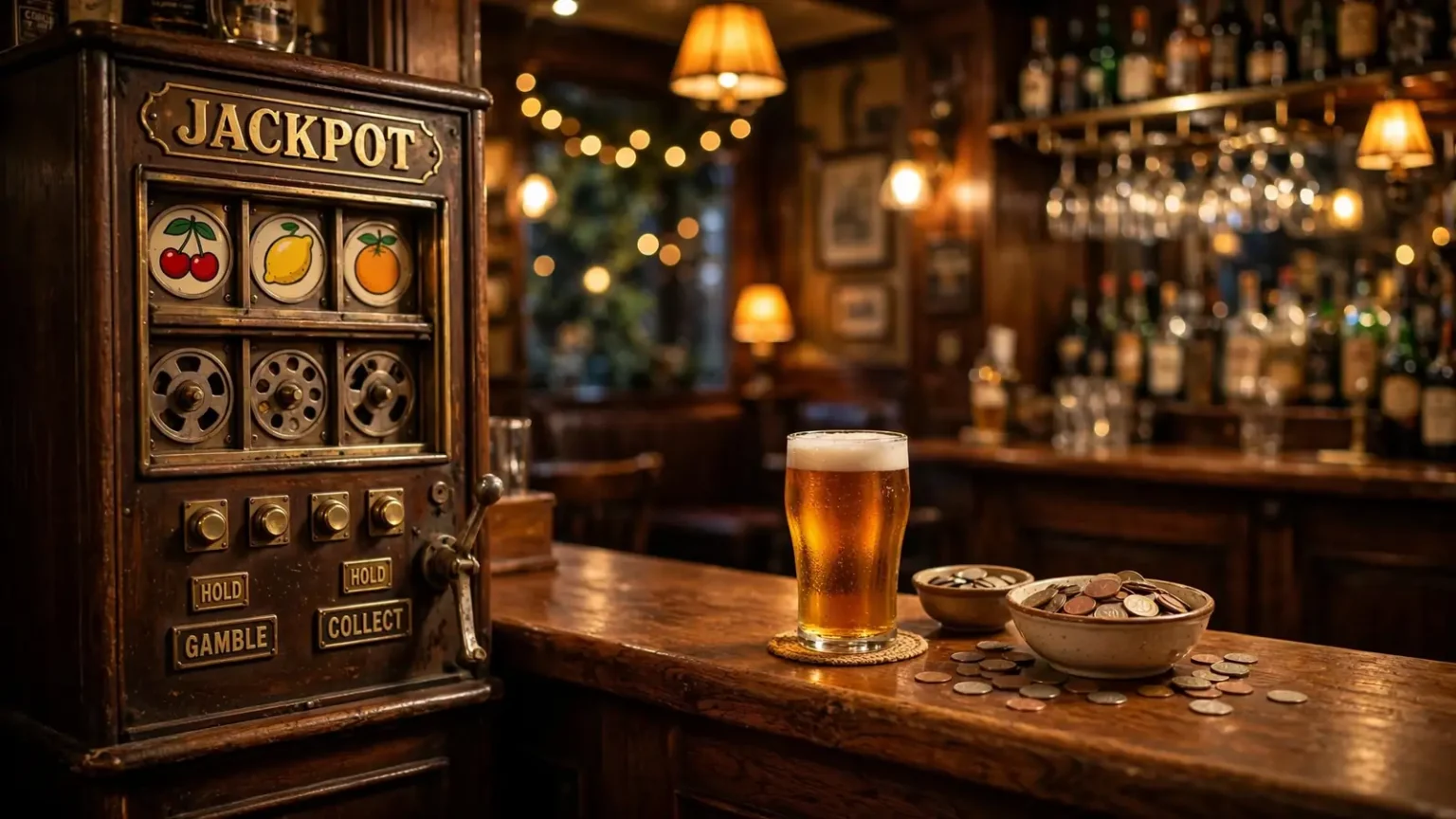
Classic reels, fruit symbols and familiar pub-machine styling can make a slot look as though it belongs to a particular supplier. That visual shortcut is tempting, especially when you are trying to find older Barcrest-style games online. I have made that mistake myself: a machine looked right, so I treated the provider label as settled. It was not.
A slot’s appearance does not establish who made it. Bright fruit symbols, bells, bars, number combinations and a simple reel layout are design features, not proof of ownership. Several studios can work within the same visual tradition, and an operator may group games by theme, popularity or cabinet style rather than by software provider. “Classic” is a description of presentation. It is not a licence, a supplier confirmation or a catalogue entry.
The same applies to searches for fruit-machine-style Barcrest games. A casino page might describe a title as a fruit slot without clearly identifying the company behind the software. Another page might use a provider name in a heading while showing a broader collection assembled by an aggregator. Until the individual game page identifies the supplier, the label is only an assumption.
Betsoft Online Casinos UK: What Can Be Verified · NetGame and Amatic Slots at UK Casinos: A Guide
What “big bet” actually tells you
“Big bet” can refer to the way a game is marketed, the size of the available stake, or simply a searcher’s wish for a more substantial playing style. None of those meanings confirms that a title comes from Barcrest. They also do not establish the game’s reel layout, volatility, return-to-player setting or maximum stake.
For British players, the legal stake ceiling for online slots is £5 per game cycle for customers aged 25 and over, and £2 for those aged 18 to 24. That rule applies to the game cycle, not to a marketing phrase attached to a slot. A title described as “big bet” cannot override it.
The age bands matter. I would not read a casino banner as permission to stake more than the applicable limit, and I would not assume that a label used on an overseas page has any relevance to a UK-licensed operator. A promotional description is not a substitute for the operator’s actual game controls.
Names are not enough
A familiar title can create another trap. A name may be reused, shortened, translated, bundled into a category or displayed differently on separate casino sites. Similar wording does not prove that two entries are the same game, and it does not prove that either entry is from Barcrest.
When checking a classic-style slot, I look for a provider field on the operator’s own game page, not just a picture or a category label. The useful details are the exact title, the named supplier and whether the game can actually be opened through that UK-facing account. If those details do not line up, I treat the attribution as unresolved.
Amatic Online Casinos in the UK: Games and Rules · Pariplay Casinos in the UK: What the Evidence Shows
That is especially important with titles associated in people’s minds with traditional British gaming machines. A visual resemblance or a remembered cabinet name may point you towards a style, but it does not authenticate the online version. Online software can be licensed, rebranded or distributed through another business arrangement. The screen may feel familiar while the underlying product is different.
Be careful with “free”
People often want to try a classic-looking slot without depositing first. That is a separate question from identifying its provider. A “free” badge may refer to a promotional route, a demo mode, an introductory feature or wording used by a page that does not offer the game at all. The label alone says very little about Barcrest attribution.
I would first establish what the game is, who supplies it and whether the operator presents a genuine play option. Only then would I examine how that access works. Clicking a tile marked “free” can lead to registration, a promotion or a general game description rather than playable software.
No shortcuts there.
A sensible check before playing
For a classic or fruit-machine-style title presented as Barcrest, separate the checks instead of blending them together:
- Identify the exact game name. Avoid relying on a thumbnail, slogan or broad category.
- Find the provider field. It should identify the software supplier rather than merely describing the theme.
- Check the operator context. A provider name appearing in a lobby is an editorial listing, not proof that the casino holds a UKGC licence.
- Read the game information. Do not infer return-to-player figures, paylines, bonus features or stake settings from the artwork.
- Check the actual account controls. British online slot play must follow the applicable stake cap and the operator’s compliance checks.
This method is less exciting than trusting a familiar-looking reel set, but it avoids turning a guess into a fact. It also stops “classic”, “fruit” and “big bet” from doing work they were never designed to do.
The honest position is simple: treat those phrases as descriptions of style or intended play, not as evidence of a Barcrest game. If the provider and title cannot be matched clearly on the operator’s current information, do not present the slot as a verified Barcrest product. Familiar packaging is not enough.
Trying Barcrest Slots for Free: What the Evidence Doesn’t Confirm
Free play sounds simple. You find a title, press a demo button, and spin without risking money. I have learned not to treat the word “free” as proof of any of that. On casino pages, it can mean a genuine practice mode, a promotional label, a preview image, or nothing more than a heading designed to pull you in.
Free play might mean a genuine practice mode, a promotional label, or a preview image that does not offer the full game.
That matters when you are looking specifically for Barcrest slots. A title should not be presented as a Barcrest demo merely because it looks like an old-style fruit machine or appears beside other games carrying similar wording. The provider, the exact title and the play mode all need to line up. Without that, “free Barcrest slots” is just a description waiting for evidence.
Demo play is not the same as real-money availability
A demo version and a real-money game are separate things. A casino may list a game for customers who have opened an account while offering no practice mode. Another operator may display a demo button but restrict access by device, location or account status. A third site may use “free play” to describe spins attached to a promotion rather than unlimited play without a deposit.
So I would check the page itself rather than rely on a directory or a copied game description. Look for:
- the provider name shown in the game information;
- the exact title, not only a broad category such as classic slots;
- a clearly marked demo, practice or play-for-fun option;
- any sign-in, deposit or eligibility requirement;
- wording explaining whether winnings are fictional and cannot be withdrawn.
If those details do not appear together, I would not call the game a confirmed Barcrest demo. A thumbnail is not a demo. Neither is a button that sends you straight to registration.
The same applies to requests for a free Rainbow Riches title. The name alone does not establish the provider, the operator, or whether a play-for-fun version exists. It is tempting to fill in the gaps from memory, especially with familiar-looking machine themes. That is how a guess becomes a “fact” on several casino pages.
“Free for fun” still needs a clear route
The phrase “for fun” should describe what happens after you select the game, not merely decorate the page. Before using a supposed free mode, I would want to know whether the reels actually load, whether the balance is virtual, and whether the session can be started without making a first deposit.
There is another small trap here. Some pages show a game in a free-play environment supplied by the casino, while others embed a promotional preview or a software demonstration. Those are not automatically interchangeable. A preview may show the artwork without offering the full game. A promotional game may be available only under bonus conditions. A demo may disappear when the operator changes its lobby.
That is why claims about “Barcrest slots free play” should be tied to a named title and a visible mode, not repeated as a general promise.
Amatic Online Casinos in the UK: Games and Checks
Phones do not settle the question
Searching for a free slot on Android or iPhone adds another layer, but the handset does not prove anything about the provider. A page can be mobile-friendly while the particular game is unavailable, restricted to an account, or offered only for real-money play. The reverse can also happen: a demo may open in a browser but not appear in an operator’s mobile app.
I would therefore treat an Android or iPhone label as a technical description, not evidence of a Barcrest free mode. The operator needs to identify the title and explain how it can be played. Otherwise, the device wording is doing more work than it deserves.
Free spins and no-deposit wording are different
Free spins are not automatically demo spins. They may be promotional rounds attached to an account, and a no-deposit bonus is still a bonus rather than proof that a particular Barcrest game has a free version. The conditions may determine which games qualify, how winnings are handled and whether a qualifying action is required.
For that reason, I would keep three questions separate:
- Is the game actually identified as a Barcrest title?
- Is there a genuine play-for-fun mode with no real-money stake?
- Is the offer instead a bonus, free-spin promotion or account incentive?
Mixing those answers produces the familiar “free Barcrest slots” pitch, but not a reliable way to play. If a page cannot distinguish a demo from a promotional reward, I would leave my payment details out of it. Simple rule. No deposit until the label survives inspection.
Barcrest Online Games: No Verified Catalogue to Rely On
The Barcrest name is often used as if it points to a clearly defined collection of online games. It does not give you enough information on its own. A title shown beside that name still needs to be identified through a reliable game listing, the provider information attached to the game, and the rules displayed when the game opens.
I have made the mistake of treating a familiar-looking fruit-machine design as proof of its origin. That is an easy trap. Cabinets, reels, symbols and bonus screens can resemble older machines without establishing who created the online version. A casino menu can also place games into broad categories that say little about the actual developer.
What counts as identifying a game?
For a game to be properly identified, I would want to see more than a name containing “Barcrest”. The useful details are:
- the provider shown in the game information;
- the complete title, spelled consistently;
- the rules or help screen supplied with the game;
- the return-to-player information, where displayed;
- the game version or other details that distinguish one release from another.
Those details belong to the individual title, not to a general reputation attached to a brand. Without them, it is impossible to say confidently whether a particular reel game is a Barcrest release, a similar product from another developer, or simply a casino category label.
That matters because descriptions of mechanics are easy to repeat and hard to verify. Claims about fixed paylines, reels, wild symbols, scatters, bonus rounds, jackpots or volatility should relate to a named game with an accessible rules screen. They should not be presented as characteristics of every game carrying a provider label.
The same applies to the phrase “online slot games”. It describes the format, not a confirmed catalogue. A browser-based reel game may look like a traditional machine while using different rules, a different mathematical model and a different published version. Visual familiarity is not evidence.
Do not fill the gaps with invented titles
It could also lead you to judge a game by an inaccurate description before you have even opened its help panel.
This is especially important when a page claims to cover “casino games” generally. That wording can include table games, jackpot products and other formats, while a reader may actually be looking for reel-based slot-machine games. A broad label does not establish that any particular format belongs to Barcrest.
Checking a game
- Identify the exact game title
- Find the provider field in the game information
- Check the operator’s UKGC status
- Verify the rules and developer details
The sensible test is simple: open the individual game, inspect its information panel, and compare the displayed provider and rules with the operator’s current listing. If those details do not line up, stop there rather than relying on screenshots, copied descriptions or a familiar visual style.
A recognisable look is not a catalogue.
Checking Casino Sites Without an Unverified “Top” List
A “top” label can make a casino page look more settled than it is. I have learnt to treat rankings as presentation, not proof. A site may place Barcrest in a menu, use the name in a landing page, or describe itself as a slot specialist. None of that, by itself, establishes that the operator is licensed to offer remote gambling in Great Britain or that the games are actually available when you sign in.
That distinction matters. A provider name in a casino lobby is an editorial or commercial listing made by the operator. It is not an entry in the UK Gambling Commission’s register, and it does not replace the operator’s own UKGC licence check. The provider and the casino also have different jobs: a software company may supply games through a business-to-business arrangement, while the casino handles your account, deposits, withdrawals, bonuses and support.
My first check would therefore be the operator, not the ranking. Look for the casino’s legal company details and UKGC licence information, then compare them with the Gambling Commission Public Register. The register is the useful part; a badge, logo or “licensed” sentence on a promotional page is only a claim until it matches the official record. Remote operators serving Great Britain must hold the relevant UKGC licence even when their technical equipment or corporate base is elsewhere.
Habanero or Amatic? UK Casino Slots Explained
After that, check the actual lobby while logged in. A provider filter can be outdated, games can be removed, and a page describing a supplier does not guarantee that every title is available to every customer. I would also check whether the operator identifies the game supplier in the title information or help material rather than relying on a generic “slots” category.
This is why I would not call one casino the leading Barcrest destination or produce a ranked list of supposed top sites. A ranking needs confirmed operator status and confirmed provider availability, not attractive wording. It also needs to remain current, because casino lobbies and supplier arrangements can change.
The safer reading is simple: a Barcrest reference may tell you how a casino has labelled its content. It does not, alone, prove a UKGC licence, confirm a particular slot, or establish that the site is suitable for British players. Check the licence separately. Then check the lobby. That order saves trouble.
Free Spins and Free Play: Check the Terms, Not the Label
“Free spins” sounds simple until you open the terms. A casino may use the phrase for spins attached to a general welcome promotion, a game-specific campaign, or a reward triggered by a deposit. That does not automatically make the offer a Barcrest promotion.
Attention A promotional offer is not a guarantee of a specific Barcrest game; always check the terms for the exact title covered.
For a genuine Barcrest free-spin offer, I would expect the terms to identify the eligible Barcrest game or games, explain how the spins are awarded, and state when they expire. The wording should also make clear whether winnings from the spins are withdrawable cash or bonus funds subject to further conditions. If the page only says “casino free spins” without naming a Barcrest title, the label is doing more work than the detail.
Free play can mean something different. Sometimes it refers to a demo mode where no deposit is involved. Elsewhere, it describes bonus spins or bonus funds attached to an account. Those are not interchangeable. Before treating a promotion as free play on a Barcrest game, check whether the game itself is identified and whether the offer applies without a deposit.
I have fallen for the bright button before. “Claim now” turned out to mean a general casino reward, with the eligible games listed somewhere else in the conditions. The important question was not whether the word “free” appeared. It was whether the named game, reward, and withdrawal rules matched what I thought I was being offered.
What to look for in the terms
- The exact Barcrest title covered by the promotion.
- Whether the reward is free spins, bonus funds, or access to a demo mode.
- Any qualifying action, such as registering or making a deposit.
- The period in which the spins or free-play entitlement must be used.
- Whether winnings can be withdrawn directly or remain subject to bonus conditions.
- Any game restrictions that exclude the title shown in the advertising.
A casino page can also change its promotional wording while leaving an old review or promotional banner online. I would therefore open the operator’s current terms from the promotion itself, rather than rely on a headline, comparison table, or third-party description.
The same caution applies to offers described as “Barcrest casino free spins” or “Barcrest free spins UK”. A provider name in a heading is not enough. The promotion needs to connect that provider to a named eligible game and a live set of conditions. Without that connection, it is safer to treat the offer as a general casino promotion, not a Barcrest-specific reward.
Playing on Mobile: Browser and App Availability Is Unconfirmed
A phone-friendly casino site does not automatically mean every provider’s games will run there. I have made that assumption before: the lobby opened neatly on my phone, so I took the mobile badge as a promise about the game itself. It was not.
For Barcrest, mobile access needs to be checked at the operator level. Look for the specific title in the casino’s mobile lobby, then see whether the operator says it is available through a mobile browser, its app, or both. A desktop listing alone tells you very little. Games can be added to one version of a lobby and absent from another.
Amatic Games at UK Casinos: Availability and Access
The distinction matters because “mobile casino” is often used as a broad label. It may describe a responsive website, not a dedicated application. It may also refer to the operator’s whole catalogue rather than every provider represented there. Do not treat an app-store listing, a mobile-friendly homepage, or a provider logo as proof that a Barcrest game is playable on your handset.
There is a documented mobile mechanism for Amatic titles: its online games are built in HTML5 and are generally played in a mobile browser without a download. That information belongs to Amatic, not Barcrest. One provider’s technical setup cannot be transferred to another provider simply because both appear in casino lobbies.
Before depositing, I would check four things:
- whether the exact Barcrest title appears after opening the operator’s mobile lobby;
- whether the operator describes browser access, app access, or both;
- whether the game loads on your device without an unsupported-browser message;
- whether the operator’s current provider information still includes the title.
That last check is worth doing even when an old review or forum post says the game worked. Casino catalogues change, and app content can differ from the browser version. “Works on mobile” is not a permanent provider guarantee.
The safest wording is therefore simple: a UK-facing operator must confirm the particular Barcrest title and the access route. Until then, calling a site the best Barcrest mobile casino is just a marketing judgement, not evidence that its games function in a browser or app. Mobile label, not proof.
GamStop and Barcrest: What UK-Licensed Casinos Must Provide
When I see a reference to a Barcrest casino “not on GamStop”, I treat that as a regulatory warning, not a selling point. GamStop is part of the protection framework for Great Britain, and every UKGC-licensed online operator has had to participate since 31 March 2020. A casino cannot present itself as serving British customers under a UKGC licence while simply opting out of GamStop.
That matters independently of whether a particular provider appears in the lobby. The name of a game supplier does not decide which consumer protections apply. The operator’s licensing position does. If you are checking an online casino that mentions Barcrest, first establish whether it is a UKGC-licensed operator serving Great Britain. Then check that the GamStop arrangements are clearly available.
Amatic Casinos in the UK: Games and Operators
What GamStop means here
GamStop allows a customer to exclude themselves from participating with GB-licensed remote gambling operators. It is not a badge attached to an individual slot, and it is not something a provider can switch on or off for selected games. If a casino is within the UKGC system, its remote gambling service must operate within that framework.
The reverse is just as important. An offshore casino that advertises itself as a non-GamStop destination is outside the UKGC system. GamStop should not be assumed to cover it, and UKGC protections or UK dispute routes should not be assumed either. I would not treat “non-GamStop” as evidence that the site is better suited to British players. It describes the absence of a safeguard.
Check the deposit controls too
GamStop is only one part of the account-protection picture. UKGC-licensed operators must ask customers to set a financial limit before the first deposit. If you reduce that limit, the change must be applied immediately.
That gives you a practical check when reviewing a casino account:
- Is the operator’s UKGC licence current?
- Is GamStop clearly supported?
- Are you prompted to set a financial limit before making the first deposit?
- Are lower limits applied without delay?
Those checks do not confirm that Barcrest games are available. They confirm whether the operator is presenting the protections expected from a UKGC-licensed casino. Keep the two questions separate. One concerns the supplier’s presence in a lobby; the other concerns the operator’s obligations.
Barcrest Slots on Mobile and the GamStop Question
Mobile access and GamStop are two separate checks, even when they appear together on a casino page. A game loading on your phone would not, by itself, tell you whether the operator is licensed for British customers. Equally, a site describing itself as “not on GamStop” is not offering a shortcut around the UK framework.
I have learnt to separate the provider question from the access question. So a casino saying that its games work on mobile does not establish that a Barcrest game is included. The operator would need to identify the title in its current lobby and explain whether it runs in a mobile browser or through its app.
Verifying Availability
Always verify the operator’s UKGC status and the specific game title independently.
GamStop is tied to the operator, not to the game provider. Since 31 March 2020, every UKGC-licensed online operator has had to make GamStop available. That means a genuinely UK-licensed casino serving British customers must support the scheme, regardless of whether its lobby contains a particular supplier’s games.
An offshore casino may advertise itself as “not on GamStop”. In plain English, that means it sits outside the UKGC system. It is not covered by the British self-exclusion framework or UKGC protections, and it should not be presented as a UK alternative for playing Barcrest titles. Offshore availability also says nothing about whether a Barcrest game is authentic, current or authorised for the British market.
Before using a phone to deposit, check the operator’s UKGC status in the Gambling Commission Public Register, then look for the exact game in the mobile lobby. The operator must verify your age and identity before allowing a deposit, and it must prompt you to set a financial limit before your first deposit. British online slots also cannot offer autoplay, with at least a 2.5-second gap between spins.
Small checks. Big difference.
Amatic Slots at UK Casinos: How They Work
Barcrest Casino Bonuses: Verify the Offer and Its Conditions
A bonus attached to a casino is not automatically a Barcrest bonus. The provider name may appear in a search result, a lobby, or a promotional heading while the actual offer applies to the casino account generally. I have learned to separate those things before looking at the headline.
I would not treat a “Barcrest welcome bonus” as confirmed unless the operator’s own terms clearly connect the promotion with Barcrest play. The same applies to a claimed no-deposit offer for UK players. If the wording only says that the casino has slots, that is not evidence that a bonus is reserved for a particular provider or game.
What to check before accepting
Read the promotion page and its full terms, not just the banner. Look for:
- whether the offer is available to new customers or existing account holders;
- whether a first deposit is required;
- which games contribute to any wagering condition;
- whether bonus funds, winnings, or both are restricted;
- the expiry period and any maximum withdrawal condition;
- what happens if you opt out or make a withdrawal before completing the terms.
These details determine the value of the offer. “No deposit” can still come with eligibility rules, a verification requirement, game restrictions, or a limit on what can be withdrawn. The label does the selling; the small print does the explaining.
For licensed operators serving Great Britain, bonus-fund wagering requirements have been capped at 10× since 19 December 2025. That does not turn an unverified promotion into a Barcrest-specific deal, and it does not remove the other conditions attached to the offer. It simply sets a regulatory ceiling for that part of the promotion.
My practical rule is simple: if Barcrest is not named in the operator’s current bonus terms, treat the offer as a general casino promotion rather than a Barcrest bonus. Save a copy of the conditions at the time you claim it. Promotions change. So does the wording.
What is the new UK slots stake limit, and how does it affect Amatic games?
The limit is £5 per game cycle for players aged 25 and over, and £2 for players aged 18 to 24. It applies to online slots at UK-licensed casinos, including Amatic games.
Are Amatic casinos on GamStop?
Amatic does not operate consumer-facing casinos, so GamStop applies to the casino operator instead. All UK-licensed online operators have been required to participate in GamStop since 31 March 2020.
What is the RTP range of Amatic slot games?
RTP can vary by game version and casino. For example, Book of Aztec has versions with RTPs of 90.57% and 97.63%.
Are Amatic casinos safe and regulated in the UK?
Amatic is a software supplier, not a casino operator, and holds a UK Gambling Commission remote software licence. Before depositing, check that the casino itself has the appropriate UKGC operating licence, since the operator handles your deposits, payouts and support.
What is the maximum I can stake on Amatic slots in the UK?
You can stake up to £5 per game cycle if you are aged 25 or over, or £2 if you are aged 18 to 24.