
Licence Verification Is Your First Line of Defence
A badge in the footer proves nothing without a registry check. Every rogue operator understands that a well-designed logo and a string of numbers can look official enough to convince players who never bother to verify. The UKGC seal has become so familiar that its mere presence creates an assumption of legitimacy—and that assumption is precisely what unlicensed sites exploit.
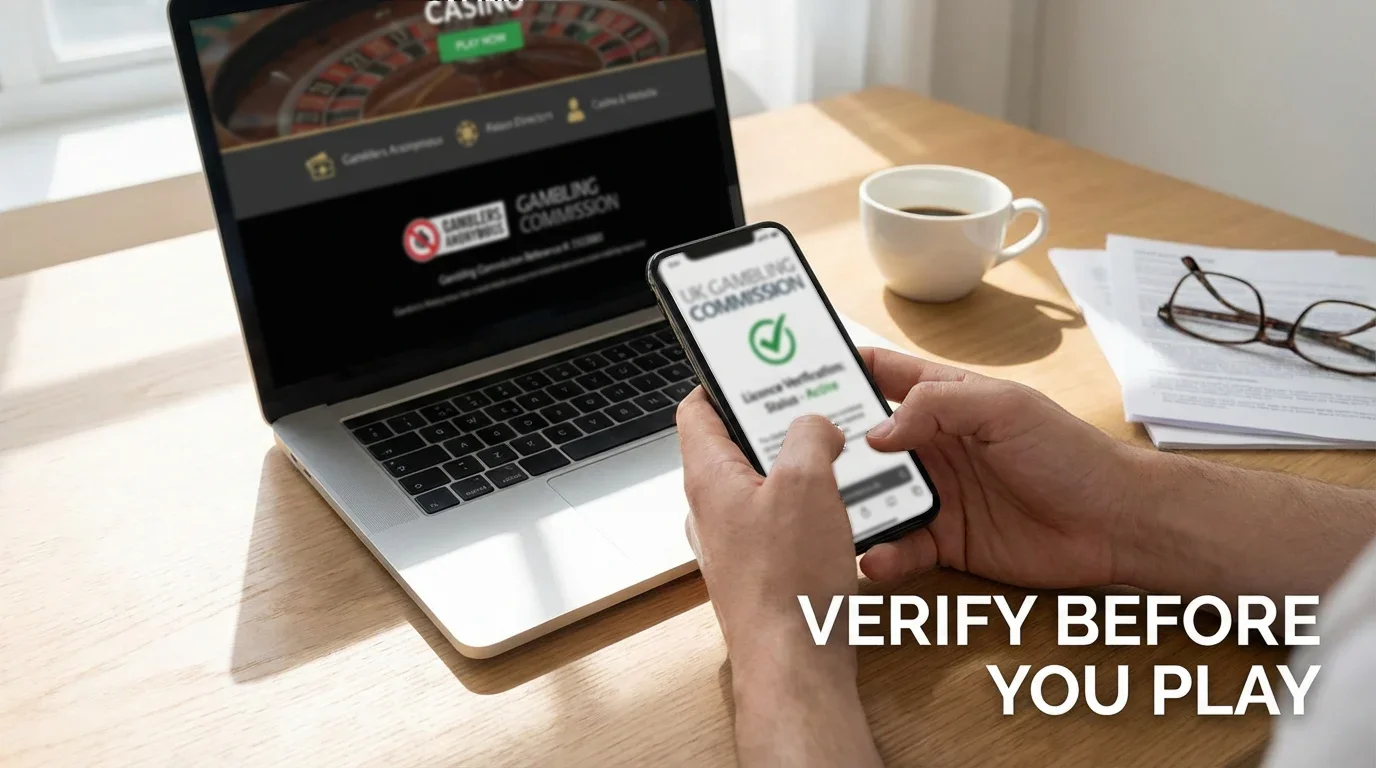
This guide exists because verification should be routine, not exceptional. The UK Gambling Commission maintains a public register specifically so players can confirm whether an operator holds a valid licence. The process takes minutes, yet the overwhelming majority of players skip it entirely. They rely on reputation, recommendations, or the gut feeling that a polished website must be legitimate. That logic fails precisely when it matters most—when you’re dealing with an operator designed to look indistinguishable from the real thing.
What follows is a systematic approach to licence verification. You will learn where casinos display their licence information, how to cross-reference that information against official records, and what to do when the details don’t align. More importantly, you will understand why this process protects you in ways that no amount of trust in a brand name ever could. Licensed operators face real consequences for violating their conditions—fines, suspensions, revocations. Unlicensed operators face nothing but the inconvenience of setting up shop under a new domain.
The distinction matters because your recourse depends on it. If a licensed casino withholds your winnings without justification, you can escalate to the UKGC’s dispute resolution process. If an unlicensed site does the same, your options are essentially nonexistent. There’s no ombudsman, no regulatory body with jurisdiction, no mechanism to compel compliance. Your deposit becomes a lesson learned rather than a debt owed.
By the end of this guide, you will be able to verify any casino’s licensing status with confidence. The tools are free, the information is public, and the process is straightforward. The only question is whether you’ll take the ten seconds required before you hand over your payment details.
Understanding the UK Gambling Commission
What the UKGC Does
The UK Gambling Commission operates as the regulatory body responsible for licensing and overseeing commercial gambling in Great Britain. Established under the Gambling Act 2005, it holds authority over casinos, betting shops, lotteries, gaming machines, and remote gambling—which includes every online casino accepting British players. The Commission’s remit extends beyond simple licensing; it actively monitors operators for compliance, investigates complaints, and has the power to impose sanctions ranging from financial penalties to complete licence revocation.
The UKGC’s core objectives centre on three principles: keeping gambling fair and open, protecting children and vulnerable people from harm, and preventing gambling from being associated with crime. In practice, this translates to stringent requirements that licensed operators must meet. They must prove financial stability, demonstrate responsible gambling protocols, maintain anti-money laundering procedures, and ensure their games produce genuinely random outcomes. Failure on any front triggers investigation and potential enforcement action.
For players, the Commission’s existence provides a crucial safety net. It maintains complaint procedures for disputes that operators fail to resolve satisfactorily. It publishes enforcement actions so players can see which operators have violated their licence conditions. And it manages the public register—the single most important tool for verifying whether a casino operates legally within British jurisdiction.
Types of Gambling Licences
The UKGC issues several licence categories, and understanding the distinctions matters when verifying an online casino. Remote operating licences cover gambling conducted via internet, telephone, television, or radio. A remote casino operating licence specifically authorises an operator to provide casino games to players in Great Britain. This is the licence type most relevant to online casino verification—without it, an operator cannot legally offer games to British residents.
Remote licences subdivide further by activity: casino, bingo, betting, lottery, and general betting limited. A single operator may hold multiple licence types depending on their product offering. An online casino that also offers sports betting, for instance, would require both a remote casino licence and a remote betting licence. Each licence carries its own conditions, and the public register displays all licences held by a given operator.
Personal licences represent the other major category. These are held by individuals rather than companies—typically key personnel within gambling operations who make strategic decisions or have oversight of day-to-day activities. While less relevant to player verification, their existence ensures accountability at the individual level, not just the corporate one. Directors and managers can be held personally responsible for regulatory failures, which adds another layer of deterrent against malpractice.
Where to Find Licence Information on a Casino Site
Footer and About Page Locations
Licensed casinos are required to display their licensing information prominently, and the site footer has become the standard location. Scroll to the bottom of any legitimate UK-facing casino and you should find the UKGC logo alongside a licence number. This number typically appears in the format of a six-digit reference, sometimes preceded by additional identifiers. The logo itself often links directly to the operator’s entry on the public register—a convenience that legitimate operators embrace rather than avoid.
The About Us page offers a secondary verification point. Legitimate operators tend to include corporate information here: the registered company name, company registration number, and registered address. This information matters because the public register lists operators by their legal trading name, which may differ from the casino brand you recognise. A casino called “LuckySpin” might be operated by “Aspire Global International Ltd” or some equally corporate-sounding entity. The About page bridges that gap and gives you the exact name to search for.
Contact pages occasionally provide licensing details as well, particularly when operators hold licences from multiple jurisdictions. A casino licensed in both the UK and Malta, for instance, might list both credentials alongside their respective regulatory logos. This redundancy actually helps verification—more data points mean more opportunities to confirm legitimacy or spot inconsistencies.
Terms and Conditions Deep Dive
The Terms and Conditions document serves as the definitive source for licensing information, even when footers and About pages seem comprehensive. UKGC requirements mandate that operators include specific regulatory details within their terms, making this document a reliable fallback when other locations prove vague or absent. Navigate to the T&C section and search for “licence,” “UKGC,” or “Gambling Commission” to locate the relevant passages quickly.
What should you find there? At minimum, the operating company’s full legal name, the licence number, and a statement confirming UKGC regulation. Better operators go further, explaining the scope of their licence and directing players to the public register for verification. They may also outline the complaint procedures mandated by their licence conditions—another indicator that they take regulatory compliance seriously.
Red flags emerge when this information is absent, contradictory, or buried in deliberately confusing language. Some unlicensed sites include generic statements about “international gaming licences” without specifying the issuing authority. Others claim UKGC licensing while providing no licence number at all. Any discrepancy between the licence details in the footer, About page, and Terms and Conditions warrants immediate suspicion. Legitimate operators have no reason for inconsistency—their licensing status is a matter of public record, and confirming it takes only minutes.
Using the UKGC Public Register Step-by-Step
Searching by Operator Name
The public register lives at the Gambling Commission’s official website under the “Public register” section. The interface is straightforward: a search field accepts operator names, licence numbers, or both. When searching by name, use the legal company name rather than the casino brand—a detail that trips up many first-time users. “Bet365” works because the company trades under that name, but “LeoVegas” requires searching for “LeoVegas Gaming plc” to get accurate results.
Partial matches appear in the results, which helps when you’re uncertain about exact spelling or corporate structure. Searching “William” returns William Hill, William Hill Organization Limited, and various subsidiary entities. This flexibility matters because gambling companies often operate complex corporate structures with multiple licensed entities handling different jurisdictions or product lines.
Once you find the operator, the register displays comprehensive details. You’ll see the full company name, trading names, registered address, and all licences held. The entry also shows licence conditions, any regulatory actions taken against the operator, and the dates when licences were granted or renewed. This level of transparency is precisely why the register exists—it provides everything you need to assess an operator’s regulatory standing without taking their word for it.
Searching by Licence Number
Licence number searches offer the most direct verification route when you already have the number from the casino’s website. Enter the six-digit number exactly as displayed—no spaces, no additional characters. The register returns the specific licence associated with that number, eliminating any ambiguity about which operator or which licence you’re examining.
This method exposes fake licences immediately. Unlicensed operators sometimes display fabricated numbers that follow the general format of UKGC licences but don’t correspond to any entry in the register. Others copy legitimate licence numbers from real operators, hoping players won’t notice that the company name doesn’t match. A direct number search catches both tactics. Either the number returns no results (fabricated), or it returns results for a different company (copied).
Keep in mind that operators may hold multiple licences for different activities. If you search a number and find a licence for “remote betting” when you expected “remote casino,” that’s not necessarily a red flag—it may simply be the wrong licence number. Check whether the operator holds additional licences that cover casino activities. The register displays all licences held by a company once you access their full entry.
Understanding Licence Status
Every licence entry displays a status indicator, and understanding these terms prevents misinterpretation. “Active” means the licence is current and in good standing. The operator can legally conduct the activities authorised by that licence within Great Britain. This is the status you want to see—anything else requires further investigation.
“Suspended” indicates the Commission has temporarily halted the licence, typically while investigating compliance concerns. Suspended operators cannot legally offer gambling services during the suspension period. Players should avoid any casino with a suspended licence, as the suspension itself signals serious regulatory concerns. Suspensions don’t happen casually; they represent the Commission taking action against potential violations.
“Revoked” represents the permanent withdrawal of a licence. The Commission revokes licences when operators demonstrate serious or repeated failures to meet their conditions. A revoked licence cannot be restored—the operator would need to apply for an entirely new licence, which the Commission can refuse based on their previous conduct. Any casino still operating under a revoked licence is doing so illegally.
“Surrendered” means the operator voluntarily gave up their licence, typically when exiting the British market or ceasing operations entirely. Unlike revocation, surrender isn’t necessarily negative—it may simply reflect a business decision. However, a surrendered licence means the operator no longer has permission to accept British players. If a casino’s licence shows as surrendered but they’re still accepting UK registrations, that’s an immediate red flag.
The register also displays “lapsed” for licences that expired without renewal. Operators must renew their licences periodically, and failure to do so results in automatic lapse. Like surrendered licences, a lapsed status means the operator cannot legally operate in Great Britain, regardless of what their website claims.
The 5-Point Licence Verification Checklist
Systematic verification beats haphazard checking every time. This five-point process covers the essential steps, ordered for efficiency. Run through it before depositing at any new casino, regardless of how reputable they appear.
First, locate the licence number and operator name on the casino’s website. Check the footer first, then the About page, then the Terms and Conditions. Note exactly what you find, including any trading names mentioned. If no licence information appears anywhere on the site, stop here—legitimate UK operators are required to display this information, and its absence tells you everything you need to know.
Second, access the UKGC public register. Navigate directly rather than clicking links from the casino’s website. A manipulated link could redirect to a spoofed version of the register designed to display fraudulent confirmations. Type the Commission’s official URL into your browser or find it through a search engine. The extra ten seconds protects against sophisticated fraud.
Third, search for the operator using the licence number you found. If the search returns results, confirm that the company name matches what the casino claims. Check that the licence type covers the activities the casino offers—a remote betting licence doesn’t authorise casino games, for instance. Verify the status shows as “Active” with no current suspensions or conditions that would affect your use.
Fourth, cross-reference the registered address. The register displays the operator’s official address, which should match or at least be consistent with corporate information on the casino’s website. Discrepancies here suggest either outdated information on one side or deliberate misrepresentation. Legitimate operators keep their public information current across all platforms.
Fifth, check for regulatory actions. The register includes a section on any enforcement actions, warnings, or conditions attached to the licence. A clean record indicates an operator in good standing. Historical issues don’t automatically disqualify a casino—the industry evolves, and even major operators have faced regulatory scrutiny—but patterns of repeated violations warrant caution. Recent actions matter more than ancient history, and the nature of violations matters more than their mere existence.
Complete this process once per operator, not once per session. Licence statuses can change, but they don’t change frequently enough to require re-verification every time you log in. An annual check suffices for casinos you use regularly. For new discoveries, verify before your first deposit without exception.
How Fake Casinos Forge Licence Credentials
Understanding fraud tactics helps you spot them. Unlicensed operators have developed increasingly sophisticated methods for appearing legitimate, and familiarity with their playbook turns you into a much harder target.
Fake Licence Numbers
The simplest approach involves displaying a licence number that doesn’t exist. Fraudulent operators generate plausible-looking numbers—six digits, sometimes with prefixes that mimic UKGC formatting—and place them in the footer alongside a convincing logo. Players who don’t verify assume the number is real because it looks right. The format alone means nothing; only registry confirmation establishes authenticity.
Variations on this theme include displaying numbers from other jurisdictions as if they were UKGC licences. A Curacao licence number might appear beneath a UKGC logo, banking on players not recognising the different format or not understanding that Curacao licensing doesn’t authorise UK operations. Some sites display expired or revoked licence numbers that were once valid, hoping the number’s previous legitimacy provides cover.
The defence remains constant: verify every number against the public register. A thirty-second check catches all these tactics regardless of their sophistication. The register either confirms the number or it doesn’t—no amount of fraudulent presentation survives actual verification.
Copied Footer Badges
Logos and badges represent pure images, easily copied from legitimate sources and placed anywhere. An unlicensed operator can download the official UKGC logo and display it on their site without any technical barrier. The presence of a regulatory logo proves only that someone had access to an image file—nothing more.
Some fraudulent sites take copying further by replicating entire footer sections from licensed competitors. They lift the complete regulatory disclosure, licence numbers and all, from a legitimate casino and paste it onto their own site. This creates the peculiar situation where two different casinos display identical licensing information. Players who verify might even find the details check out—for the wrong company.
Catching this requires matching the verified operator name to the casino you’re actually using. If the register confirms that “Gamesys Operations Limited” holds licence number 38905, but you’re on a site called “WinPalace Casino” with no corporate connection to Gamesys, the licence verification means nothing. The licence is real; its application to the site you’re visiting is not.
Impersonating Licensed Operators
The most sophisticated fraud involves outright impersonation. Scam operations create websites that closely mimic established, licensed casinos—similar names, similar designs, sometimes near-identical domain names. “Bet365Casino.com” versus “Bet-365-Casino.com” represents the kind of subtle variation that catches inattentive players.
These impersonation sites display the legitimate operator’s actual licence information because they’re pretending to be that operator. Verification appears to succeed because you’re checking real credentials—but the site using those credentials isn’t the licensed entity. The fraud succeeds by exploiting the gap between “this licence is real” and “this site holds this licence.”
Domain verification closes this gap. Licensed operators register specific domains with the UKGC, and the public register includes information about authorised websites. Cross-reference the domain you’re visiting against the operator’s registered details. Legitimate casinos use consistent branding across their licensing documentation and their actual web presence. Impersonators can copy logos and numbers, but they can’t make the UKGC register list their fraudulent domain as an authorised site.
What to Do If a Licence Doesn’t Check Out
Failed verification demands action, not just avoidance. When you discover a site operating without proper licensing, you have both an obligation to protect yourself and an opportunity to protect others.
Reporting Unlicensed Operators
The UK Gambling Commission accepts reports about potentially unlicensed gambling operations through their official website. The reporting process is straightforward: provide the site’s URL, describe what you observed, and include any licence information the site displayed. Screenshots of the footer, About page, and Terms and Conditions help investigators verify your findings.
Your report contributes to a larger enforcement picture. The Commission maintains ongoing investigations into illegal gambling operations, and player reports serve as intelligence that guides their priorities. A single report might not trigger immediate action, but patterns of reports about the same operator accelerate investigation timelines. The information you provide matters even if you never see the outcome.
Beyond the UKGC, consider reporting to Action Fraud—the UK’s national reporting centre for fraud and cybercrime. An unlicensed casino operation constitutes fraud, and Action Fraud reports feed into National Crime Agency intelligence. For sites that appear to target UK players specifically, reports to the Advertising Standards Authority may also apply if you encountered the site through advertising channels.
Protecting Yourself After Exposure
If you’ve already interacted with an unlicensed site, damage control becomes the priority. The extent of necessary action depends on how far that interaction went. If you only visited the site without registering, your exposure is minimal—close the browser, clear your cookies, and move on. If you created an account or submitted personal information, the situation requires more attention.
Registration typically involves providing email addresses, phone numbers, dates of birth, and sometimes identity documents. This information has value to criminals beyond the casino operation itself. Monitor your email for phishing attempts referencing the fraudulent casino. Consider the information you provided and whether it creates risks elsewhere—if you used the same password you use for other accounts, change those passwords immediately.
Financial exposure creates the most urgent concern. If you deposited funds or provided payment details, contact your bank or payment provider without delay. Explain that you made a payment to what you now believe is a fraudulent gambling operation. Request that they block further transactions to that merchant and investigate whether a chargeback or fraud claim is possible. Card issuers and e-wallet providers have different policies, but early reporting consistently improves your chances of recovering funds.
Document everything while your memory remains fresh. Screenshot any communications with the site, note the exact domain you visited, and preserve any confirmation emails or receipts. This documentation supports both your fraud claims and any reports you file with regulatory or law enforcement bodies.
Licence Verification FAQ
Can a casino lose its licence while I’m using it?
Licence statuses can change at any time. Suspensions and revocations happen when the Commission identifies serious compliance failures. If your current casino’s licence is suspended or revoked, you should stop playing immediately and contact customer support regarding your account balance. Licensed operators are required to have procedures for returning player funds in such circumstances, though the process may take time. For added security, periodic re-verification of operators you use regularly catches status changes before they become problems.
What if a casino has multiple licences from different countries?
Multi-jurisdictional licensing is common among major operators. The relevant question for UK players is whether the operator holds a valid UKGC licence specifically—other licences don’t authorise operations in Great Britain. An operator might be perfectly legitimate in Malta while operating illegally in the UK if they lack UKGC authorisation. Treat each jurisdiction independently and verify UKGC licensing regardless of what other credentials the casino displays.
Does the public register include personal licence holders?
The register covers both operating licences and personal licences, though player-facing verification focuses on operating licences. Personal licence searches become relevant if you’re investigating specific individuals within a company—useful for due diligence but unnecessary for standard pre-deposit verification. The operating licence confirms the company can legally offer gambling services; that’s the essential check.
How often does the UKGC update the register?
The register reflects current licensing status and updates as changes occur. New licences appear once granted, status changes show immediately upon enforcement action, and operator details update as companies submit amendments. There’s no fixed update schedule because changes happen in real-time as regulatory decisions are made. When you search the register, you’re seeing the current state of that licence, not a periodic snapshot.
Can I verify a casino’s licence using their footer link?
Footer links that direct to the register provide convenience, but you should access the register independently rather than trusting embedded links. A malicious site could link to a spoofed register or a cached page showing outdated information. Type the UKGC’s official address directly into your browser to ensure you’re accessing the genuine register. The few extra seconds eliminate an entire category of fraud.
The Register Is Your Receipt — Use It
Ten seconds on the register beats ten hours with customer support. That’s the fundamental calculation this entire guide reduces to. Every verification step outlined here takes minutes at most, while disputes with unlicensed operators can consume weeks of frustration with no guaranteed resolution. The time investment in prevention rounds down to nothing compared to the time cost of recovery.
The tools are free and public by design. The Gambling Commission maintains the register specifically so players can protect themselves. They want you to verify because informed players reduce the burden on regulatory enforcement. Every time you check a licence before depositing, you’re doing exactly what the system intends.
What you’ve learned here applies to every online casino you’ll ever consider. The operators change, the designs evolve, the bonuses vary—but the verification process remains constant. Licence number to register, register to confirmation, confirmation to decision. Run this process once per operator and you establish a baseline of trust that no amount of marketing polish can substitute.
The casinos that pass verification aren’t guaranteed to be perfect. Licensed operators can still have slow withdrawals, mediocre game selections, or disappointing bonus terms. What they can’t do—legally—is refuse to honour your winnings, disappear with your funds, or ignore your complaints entirely. The licence creates accountability, and accountability creates recourse. That distinction matters most precisely when things go wrong.
Save this guide, bookmark the public register, and verify before you deposit. The habit takes seconds to form and offers protection that lasts as long as you play. Your bankroll deserves that much diligence.
Find licensed casinos at trustedcasino-uk. Also read our UKGC licensed casinos.