

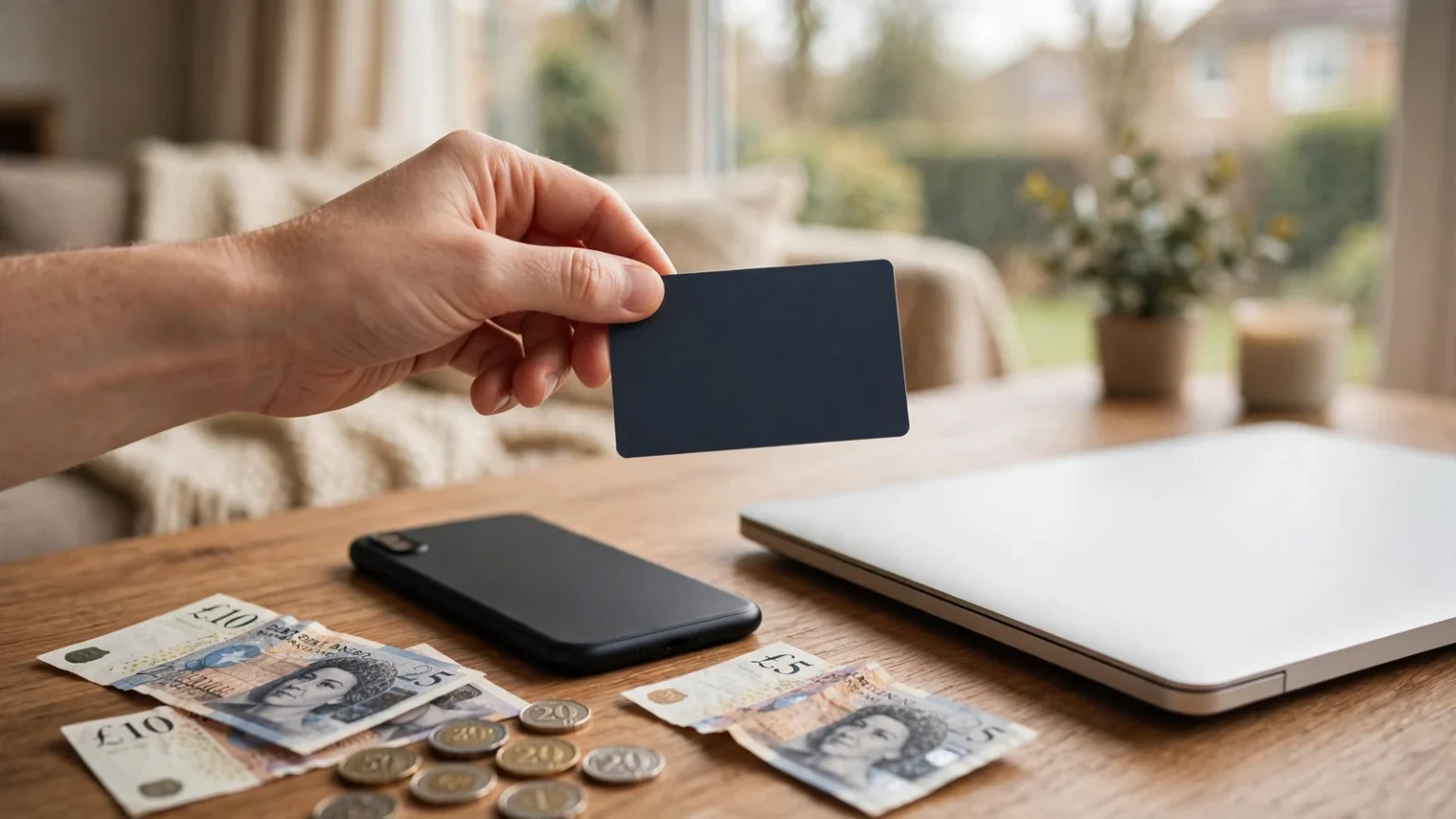
Card acceptance can vary by account and transaction, so review the cashier, payment costs, withdrawal routes and limits before relying on it.
What debit cards can do at UK casino sites
Debit cards remain one of the most recognisable ways to fund a casino account in Britain. When people look for casino sites that accept debit cards, they are generally looking for a familiar payment route rather than another gambling product. The card is already linked to their bank account, the details are familiar, and the payment process does not require opening a separate wallet.
UK casinos commonly accept debit cards issued on the Visa or Mastercard networks. That covers a large part of the cards people use every day, but it does not mean that every card will work at every cashier. “Accepted” is not a magic word. It means the payment route is offered somewhere in the operator’s system; your particular card still has to be eligible when you try to use it.
That distinction is easy to miss. I have made the mistake of seeing a Visa or Mastercard logo on a payment page and treating it as a guarantee. It is not. The logo identifies the card network, while the cashier decides which payment route is available for the account and transaction. Small difference. Important one.
Why debit cards remain a familiar casino payment route
A debit card is a direct way to pay from a bank account. You enter the card details in the casino cashier, choose the amount offered there, and authorise the payment through the bank’s security process. There is no separate e-wallet balance to maintain and no new payment account to learn.
That familiarity is the main attraction. If you already use a debit card for ordinary online purchases, the casino cashier looks less foreign than a specialist payment service. You can also keep the card alongside your usual banking arrangements instead of moving money into another account first.
The appeal is practical rather than glamorous. Payment pages often dress up a card method as “instant” or “seamless”. What sits behind that wording is simply a card transaction that has been approved or declined by the relevant payment systems. No mystery there.
For that reason, debit cards are often the first route people consider when comparing debit card casino sites in the UK. They are not necessarily the only route shown by a casino, and the presence of a card option does not tell you anything about the quality of the games, the operator’s service or the terms attached to an account. It tells you one useful thing: the cashier has a card-payment route available in some form.
Casino Payments: UK Deposit and Withdrawal Methods
Visa and Mastercard are the names to look for
Visa and Mastercard are the two card networks most relevant to this question. A casino payment page may display one logo, the other, or both. You should read those symbols as a starting point, not as a complete promise about every debit card carrying that branding.
The same network name can appear on cards with different issuing banks and product arrangements. The casino may also present separate card buttons for different currencies or transaction types. That is why a search for “best debit card casino sites” cannot sensibly be answered by logos alone. A list based only on Visa and Mastercard symbols would leave out the details that affect whether the payment actually suits you.
I would also avoid confusing a card network with a bank. Visa and Mastercard process card payments, while your bank issues the card and controls the account behind it. A problem may therefore come from the casino cashier, the payment processor, the issuing bank or the card’s own settings. Seeing the right logo does not identify which of those will approve the transaction.
What card acceptance does—and does not—tell you
A card option tells you that the casino has chosen to support card payments for at least part of its customer base. It does not create a ranking. “Top debit card casino sites” and “best online casino sites that accept debit cards” sound like they describe the payment method, but acceptance is only one narrow feature of a site.
Two casinos may both show Visa and Mastercard while offering a different overall cashier, different account conditions and different ways to manage payments. One may show the card option prominently; another may place it among several alternatives. Neither presentation proves that one is better for you.
The sensible way to read a card badge is therefore quite limited: it tells you to investigate that route, not to rely on it blindly. Check the actual cashier when you are ready to pay, and treat the available option as current information rather than assuming that a card accepted elsewhere will behave identically here.
While the presence of a card logo indicates the network is supported, the actual availability of the payment route depends on the specific operator’s system and your particular card’s eligibility.
There is also a useful difference between recognising a payment method and choosing it as your regular method. You may prefer the direct connection to your bank account, or you may dislike entering card details into more than one gambling account. Someone else may value a different arrangement. A debit card is a standard tool, not a recommendation by itself.
So, when you see casino sites that accept debit cards in the UK, read the phrase plainly. It means that Visa and/or Mastercard debit payments are commonly supported by UK casinos. It does not mean every card is guaranteed to pass, every cashier is identical, or that the site deserves a “best” label. Start with the card network, then look at the live payment options before you commit.
Making a debit card deposit—and getting your money back
A debit-card deposit and a debit-card withdrawal may look like two halves of the same transaction. They are not. I learnt that after treating the cashier’s green “successful” message as proof that the whole payment system would behave just as quickly in reverse. It does not.
When you fund an account at an online casino with a debit card, the deposit can appear almost immediately. That is the part most people notice: enter the card details, confirm the payment, and the balance updates without much waiting. A later withdrawal follows a different process. It has to be requested, checked by the casino and then passed through the relevant payment route.
A specialist review describes the contrast clearly: the card balance can be credited instantly, while receiving a payout may take several business days. That is not a promise for every online casino with a debit card in the UK. It is a useful reminder not to judge the withdrawal experience by the speed of the initial deposit.
UK Casino Sites That Accept EcoPayz or Payz
What happens when you deposit
The usual sequence is straightforward. You select the debit-card option in the cashier, enter the requested payment information, choose the deposit amount and confirm. The casino then records the payment and adds the funds to your gambling balance if the transaction is approved.
Visa debit cards and Mastercard debit cards are familiar examples, but the important point is what happens in the cashier at that moment. A card may be suitable in principle and still fail to process because the casino, card issuer or payment system does not accept that particular transaction. A declined payment is not the same thing as a withdrawal delay, so I keep those two problems separate.
Once the money is visible in the balance, the casino may still apply its own rules to how it can be used. Those conditions belong to the account and payment arrangement rather than to the basic act of entering a card deposit. I would read the cashier and account terms before assuming that a successful deposit means an equally simple cash-out.
The first deposit can also be the point at which the operator checks account details or asks for information connected with KYC. That matters later. If verification is unfinished, a withdrawal can wait even though the deposit went through without interruption.
Why the withdrawal takes longer
Requesting a payout starts another workflow. The casino may first review the account, confirm that the withdrawal request is valid and complete any checks required before releasing funds. A specialist review notes that the operator’s internal approval is part of the withdrawal timetable and that a first withdrawal can take longer while verification is completed.
Attention A successful deposit does not guarantee a fast withdrawal; the payout process involves additional verification and internal casino approvals that can take several business days.
That explains the most irritating situation: the balance changes quickly when you deposit, but the withdrawal remains pending. The payment itself may not be the only thing being examined. The casino may be checking whether the account is fully verified, whether the transaction details are consistent and whether the request can be approved under its procedures.
Withdrawal speed therefore depends on two moving parts: the casino’s internal approval process and the verification status of your account. Another specialist review makes the same distinction between a payment being requested and the payout actually reaching the customer. In plain English, “withdrawal submitted” does not necessarily mean “money on the card”.
First withdrawals deserve particular attention. If the casino still needs to complete KYC, the request may spend longer in review than a later withdrawal from an already verified account. That is why I avoid planning around the fastest-looking deposit screen. It tells me how quickly money entered the account, not when money will leave it.
Check the status rather than guessing
After requesting a withdrawal, look at the cashier or account history for the actual status. “Pending” indicates that the operator has not finished its process; “approved” indicates a different stage from the final delivery. The labels vary between casinos, so I would not read more into them than the operator explains.
Casinos That Accept Wirecard in the UK: What to Check
If the account is not fully verified, deal with that before treating the delay as a card problem. If it is verified and the casino has approved the withdrawal, the remaining wait may relate to the payment route rather than the original deposit.
This is also where expectations matter. A debit card online casino can make paying in feel immediate while making paying out feel procedural. That difference is normal to the transaction structure, not evidence that the card has stopped working.
My practical rule is simple: regard the deposit as instant only when the balance has actually updated, and regard the withdrawal as complete only when the money has reached the destination shown by the cashier. The two moments are not interchangeable.
Check the cashier before you rely on a card
A casino may display Visa and Mastercard among its payment symbols, yet that does not automatically mean every debit card on those networks will work at the moment you try to pay. I have learnt to treat the cashier as the useful answer, not a logo on a landing page.
That distinction matters if you are looking for online casinos with debit cards in the UK. A payment page can show a familiar network while the available option depends on the particular card product, the account setup, or what the operator currently supports. The practical check is simple: open the cashier, select the card route, and see whether your card can actually be used before you build your plans around it.
Check before depositing
- Verify Visa or Mastercard is selectable in the cashier
- Confirm your specific card product is accepted
- Check that the cashier accepts your chosen currency (GBP)
- Ensure the account is in your own name
Start with the cashier, not the advert
Payment information on a casino site can be broad. It may mention Visa or Mastercard without spelling out which debit-card products are eligible. A specialist review can also list both networks, but current UK availability and card-product eligibility still need to be confirmed in the cashier.
That is not a contradiction. Visa and Mastercard are networks, not a promise that every card carrying their mark will be accepted by every online casino. Your bank may issue a card with its own controls, and the casino’s payment provider may apply its own acceptance rules. The cashier is where those separate parts meet.
I now check three things before attempting a deposit:
- whether Visa or Mastercard appears as a selectable payment method;
- whether the card type I hold is accepted, rather than relying only on the network logo;
- whether the cashier accepts the transaction in the account’s chosen currency.
If the option is absent, I do not keep trying random payment screens. That usually creates more annoyance than progress.
Check your card’s actual eligibility
The phrase “debit card accepted” is not precise enough on its own. It may describe the network listed by the casino, while your specific card product is treated differently at checkout. The only safe assumption is that compatibility has to be checked at the time of payment.
This is particularly important when comparing an online casino that accepts debit cards with one that merely advertises card payments. Both descriptions can sound identical until you reach the cashier. One may present a working Visa route for your account; another may show a card icon but not offer a usable option when you sign in.
I would also avoid judging compatibility from a general payment-methods page alone. Those pages are useful for knowing what to look for, but the logged-in cashier is the practical test. If the payment method is available there and the card details are entered correctly, you have a much clearer answer than a promotional badge can provide.
Confirm the account currency
Currency is another small detail that is easy to skip. The payment pages in question state that GBP is supported, but the account currency should still be confirmed before the first transaction. A card can be suitable while the account is set up in a currency you did not intend to use.
That check belongs alongside card compatibility, not after it. Look at the currency shown in the account or cashier before confirming anything. If it is not GBP, stop and check the available account settings rather than assuming the payment will simply be handled in pounds.
I have made the mistake of reading the payment method and ignoring the currency beside it. The card route looked familiar, but that was not enough information to make the transaction clear.
A quick compatibility routine
For a casino you are considering, the following order keeps the check focused:
- Sign in and open the cashier.
- Look for Visa or Mastercard as an available debit-card route.
- Check that your particular card product is eligible.
- Confirm that GBP is supported for the account and payment.
- Read the payment screen before submitting the transaction.
This is also the right approach when comparing a casino that accepts debit cards with several alternatives. There is no need to call one the “best” online casino that accepts debit cards before checking whether its cashier actually suits your card. A top position on a list cannot make an unavailable payment method appear.
The same caution applies if you want to play slots with a debit card: the game is not the part that determines whether the payment works. The cashier does. Check it at the point where you intend to deposit, because availability and card eligibility are details that need to be current.
Why casino payouts may go back to your card
When I first used a debit card at a casino, I assumed a withdrawal would simply go to whichever account I selected. That sounds logical, but the cashier may not work that way. If you deposited with a card, the remote gambling licensee may direct the return of funds to that same payment source.
UK anti-money laundering rules often require gambling payouts to be sent back through the original payment source used for the deposit.
This is not a reward for choosing Visa or Mastercard, and it is not necessarily a sign that the debit card is the fastest route. It is mainly about tracing where the money came from. UK anti-money laundering rules generally require gambling payouts to be sent back through the original payment source where that route supports withdrawals.
That is why a debit card casino may show a card as the default withdrawal destination after you have funded the account with it. The cashier is following the payment trail rather than inviting you to choose any destination you like.
What “original payment source” means
The original source is the payment method used to put money into the casino account. In a card transaction, that normally means the eligible debit card connected with the deposit. The casino may not treat a new bank account, e-wallet or another card as an interchangeable replacement.
There can be more than one payment source on an account. For example, you might have made deposits using a debit card and another available route. The cashier can then apply its own routing rules, including asking for funds to return through the relevant source before another method is considered.
The important point is simple: a payment method shown for deposits is not automatically a free-choice payout method. Deposit access and withdrawal routing are separate decisions.
Why casinos use this arrangement
Returning funds to the source is a standard anti-fraud and AML control. It helps the casino connect the withdrawal with the transaction that funded the account, rather than sending gambling funds to an unrelated destination. That makes it harder to use the cashier to move money between people or accounts without a clear payment trail.
I used to see this as pointless paperwork. Then I had to explain why a payment destination did not match the one used at deposit. The “easy” alternative was not easy at all.
For someone comparing UK debit card casinos, this matters more than a payment badge on the front page. The cashier may accept your card for funding, but the practical question is whether the same card can receive the return. Read the withdrawal instructions before treating the card as your complete payment solution.
DO
- Use a card linked to your own name and bank account
- Check the cashier for real-time availability and currency support
- Verify if the card is eligible for both deposits and withdrawals
DON’T
- Assume a card logo on a landing page is a guarantee of acceptance
- Rely on a credit card for gambling deposits
- Ignore the account currency settings before confirming a transaction
What if the card cannot receive the payout?
A casino may not be able to return funds to every card used for a deposit. The card could be unsuitable for incoming gambling-related credits, the issuer might not support the transaction type, or the payment route may no longer be available. In that situation, the cashier may offer an alternative route.
An alternative is not necessarily automatic. The casino may ask for extra verification before sending the money elsewhere. This can include confirming that the replacement destination belongs to you or explaining why the original route cannot be used. The point is to preserve the link between the account holder, the deposit and the withdrawal.
That is also why changing payment details mid-process can create friction. It does not prove that a debit card casino is unreliable; it means the casino has to check a different path for the funds.
A practical check before depositing
Before using a card, open the cashier and look at both sides of the transaction:
- whether the debit card is available for deposits;
- whether it is listed as an eligible withdrawal destination;
- whether the withdrawal instructions mention return-to-source or closed-loop rules;
- what happens if the original card cannot receive funds.
The exact options can change with the cashier and the card product. A Visa debit card accepted at one UK casino may not produce the same payout route at another, so a logo alone tells you very little.
If the payout must go back to the card, keep access to that card and retain the relevant transaction details. Do not close the account or assume that a different card will be accepted without checks. For card users, the cleanest arrangement is a clear route in and a clear route back out.
What makes a card payment setup work for you
A debit card payment setup makes sense when you value familiarity more than having every possible route in one cashier. You already know how your card works, your bank statement is easy to follow, and you do not need to create a separate wallet account just to fund a casino balance. That straightforwardness has value. I have made payments more complicated than they needed to be simply because a “smart” alternative sounded better.
The useful test is not whether a site calls its card option “best”. It is whether the arrangement fits the way you actually manage money.
Start with your normal banking habits
If your day-to-day spending is already handled through a Visa or Mastercard debit card, keeping casino payments on that card can make your records easier to understand. You see the transaction in the same banking app as everything else, rather than checking several payment accounts.
Casinos That Accept Bitcoin in the UK: What to Check
That can also make it easier to notice when you have reached the amount you intended to spend. A separate wallet may feel less visible, while a card transaction sits alongside ordinary spending. For me, that visibility is a practical safeguard, not a disadvantage.
A card may be less suitable if you prefer to keep gambling transactions separate from your main bank activity. In that case, another cashier route might feel cleaner. The trade-off is another account, another login and another set of payment conditions. Convenience cuts both ways.
Compare the route, not the label
A card is not automatically the quickest way to move money in both directions. A specialist review may describe open banking and bank transfers as providing instant deposits and fast withdrawals at many sites, but that is a time-sensitive observation rather than a promise for every cashier. The same caution applies to a specialist review describing PayPal, open banking services and debit cards connected to fast payout systems as among the quicker withdrawal routes.
That gives you a sensible comparison point: if getting funds out promptly matters more than using the payment method you already know, inspect whether the alternative supports the full transaction flow. Do not assume that an option shown under deposits can also receive a payout.
Choosing your setup
A payment method is best when it aligns with your existing banking habits and provides a clear, consistent trail for both deposits and withdrawals.
Open banking can appeal if you want to authorise a payment directly through your bank. A debit card can appeal if you prefer entering familiar card details and keeping the process consistent. Neither choice is universally right. It depends on which part of the transaction you care about most.
Look for a setup you can repeat
The cleanest arrangement is often one named account used consistently for both deposit and withdrawal. That reduces unnecessary moving parts and makes it easier to keep your payment records straight. I would rather have a plain route that I understand than chase a method because it carries a flashy “fast” label.
Before settling on card deposits, consider three points:
- Is the card the payment tool you already monitor confidently?
- Does the cashier show a route that supports the transaction direction you need?
- Would an alternative make your records clearer, or merely add another account?
If the answers point towards the card, use it because it suits your routine—not because a page has called it the best debit card casino option. That phrase says very little about your own banking habits. Your setup should make the money trail easy to follow.
That is the real test.
Deposits, withdrawals and the other routes in the cashier
A UK casino cashier can offer more than a debit-card button. Depending on the operator and your account, you may see cards, bank transfer, open banking, e-wallets, prepaid vouchers and, at some sites, mobile-wallet options. The important distinction is not how many logos appear on the page. It is what each route can actually do.
A method may be suitable for adding funds but not for receiving a payout. That makes it a deposit-only option. Paysafecard is the clearest example: it is a prepaid voucher intended for deposits, so it is not a route for withdrawing casino funds. I have used payment methods that looked perfectly practical at the cashier, only to discover that they were useful at the front end and irrelevant when money needed to come back. Small detail. Big difference.
Card and bank-based routes
Debit cards remain one possible route for a casino that accepts debit card deposits, with Visa and Mastercard among the card brands seen in UK casino payment information. A card can be familiar and straightforward, but the cashier still decides whether that particular card product is supported at the time you pay.
UK Casinos That Accept Instadebit: What to Check
Bank transfer and open banking sit in a different category. A specialist review reports that open banking and bank transfers can support instant deposits and fast withdrawals at many sites. That is not a promise for every operator: the available banking connection, account checks and cashier configuration still matter. Bank transfer delivery can also be affected by cut-off times, weekends and currency conversion.
Open banking may take you directly through your bank rather than asking you to enter card details. A conventional bank transfer may require account information supplied by the casino. Either way, read the instructions shown in the cashier carefully and keep the payment route consistent with the account receiving the funds.
E-wallets and prepaid options
PayPal is another route that may appear alongside card deposits. A specialist review describes it as popular for speed and convenience, while also reporting that it may be left out of bonus eligibility. That means the payment method and the promotion can have separate rules. Check both before you deposit.
Skrill and Neteller are available at some sites. A specialist review reports that these e-wallets are often excluded from promotions, so they should not be treated as automatically bonus-compatible. Their presence in a cashier tells you that the operator supports that route; it does not settle the terms of a particular offer.
Apple Pay is accepted for deposits by some UKGC-licensed casinos. Its appearance can depend on the casino, the device and the payment setup, so it is best viewed as an available route where displayed rather than a universal option.
Debit Cards
Commonly Visa or Mastercard networks used for direct bank-linked transactions.
E-wallets
Services like PayPal, Skrill, or Neteller that offer separate digital balances.
Bank Transfers
Direct transfers or open banking routes that connect your account to the casino.
Jeton remains available at a handful of UK online casinos in 2026, according to a specialist review. That is a narrow availability point, not a reason to expect it in every cashier. The same applies to other less common wallets.
Read both columns, not just the deposit button
When comparing an online casino that accepts debit card deposits with one offering several alternatives, look at the cashier’s deposit and withdrawal sections separately. Card, bank-based and selected e-wallet routes may support both directions, while a voucher such as Paysafecard is deposit-only. Promotions can also treat PayPal, Skrill or Neteller differently from other methods.
The practical shortlist is simple: identify the route you can fund, then confirm whether that same route supports a payout. Otherwise, the impressive-looking cashier is only half a payment system.
Compare the real cost of paying by card
When I compare debit-card payments, I no longer stop at the cashier line that says “fee-free”. That phrase sounds reassuring, but it may describe only the casino’s own charge. The real cost can also involve the payment provider, your card issuer or bank, a currency-conversion spread and network fees.
A specialist payment review highlights the same trap: the visible flat fee is not always the largest cost. Currency conversion is the awkward one because it can be built into the exchange rate rather than shown as a separate deduction. You may see no obvious charge and still receive less value when money moves between currencies.
That is why there is no single payment method that is automatically the cheapest for every player or every transaction. A route that looks inexpensive for a small deposit may work differently when the amount changes, or when the casino, provider and bank handle different currencies.
My practical check is simple. Before confirming a card payment, look for:
- a casino processing charge;
- any fee from the payment provider;
- possible issuer or bank charges;
- the exchange rate and any spread;
- network costs connected with the card transaction.
Then compare the total cost for the actual amount you intend to deposit, rather than comparing labels such as “free” or “low fee”. The same check matters when money is converted back or returned, because the rate used at that stage may not match the rate used for the original payment.
I have made the mistake of choosing a route because its separate fee was easy to spot, while ignoring the exchange rate. The headline looked cheap. The calculation was not.
“Free” is not a total.
Debit card or credit card? The UK rule matters
The important distinction is not simply “card payment” versus “another payment”. In Britain, the type of card decides whether the transaction can be used for gambling at a UK-licensed casino.
Debit cards are commonly accepted, including Visa and Mastercard debit cards. That means you can generally fund a casino account directly from your bank-linked card, provided the payment option is available for that account and the card itself is eligible. The money comes from your current-account balance or available bank funds, rather than from a borrowing facility.
Credit-card payments for gambling are different. The regulator banned them on 14 April 2020, and that rule has not been relaxed. UK-licensed casinos cannot accept credit cards for gambling deposits. This applies even if a credit card seems to work for ordinary online shopping or entertainment payments. The restriction is about using it to fund gambling.
I learned this distinction the slightly annoying way: seeing the Visa or Mastercard logo and assuming every card carrying it would be treated alike. The logo identifies the card network, not whether the card is debit or credit. Check the card type with your bank if you are unsure.
Credit Card Ban
UK-licensed casinos are strictly prohibited from accepting credit cards for gambling deposits.
The same boundary matters with digital wallets. A wallet cannot be used for gambling where it allows credit-card funds to be used for that purpose. Adding a credit card to a wallet does not create a permitted workaround.
So, when you are deciding whether to deposit at an online casino with a debit card, look for a debit card option and use a card linked to your own bank account. Do not treat “Visa accepted” or “Mastercard accepted” as permission to use any product carrying that branding. Debit is the route commonly available; credit-card gambling is not. That is the rule, not a promotional preference.
Use payment details that match your casino account
When joining a debit card casino in the UK, the name and personal details on your gambling account should match the details connected with your payment method. It sounds obvious, but it is an easy place to create unnecessary friction. I have seen how a small mismatch can turn a straightforward transaction into a request for clarification.
Use your own name when registering, rather than a nickname or someone else’s details. The same applies to the address and other account information requested during registration. If your debit card is issued in your name but the casino account belongs to somebody else, the operator may not be able to treat the payment as a normal customer transaction.
Casinos That Accept iDEAL in the UK: Payment Checks
That does not mean every minor difference will automatically cause a problem. Addresses can change, names can be updated, and banks may display information in slightly different ways. The sensible approach is to correct your casino profile when something has changed and keep the information accurate before you try to pay.
The cleanest setup is one named account used consistently for both depositing and withdrawing. This gives the casino a clear link between the customer profile and the payment route. It also avoids the confusion that can come from switching between accounts, cards or wallets belonging to different people.
If you are asking which casino you can join using a debit card, do not look only at the card logo shown in a payment panel. Check that the account can be opened in your own name and that the cashier accepts a payment route registered to you. A debit card may carry Visa or Mastercard branding, but ownership details still matter.
Before confirming a deposit, review:
- the name on your casino account;
- the name attached to your debit card;
- the address and personal details in your profile;
- whether the payment account belongs to you.
This is not about finding a clever workaround. It is about removing avoidable questions before money moves. Keep it consistent.
Before your first card deposit, check the amount and limits
Before I put a debit card into any cashier, I check the minimum deposit shown beside the payment option. A specialist review places the starting point at £10–£20, but that is not a fixed rule for every casino or card route. The figure can change with the selected payment method, so I use the cashier’s current number rather than relying on a comparison page.
I also look for the maximum allowed. It may apply to one transaction, a day, or a month, and the ceiling can vary according to both the payment method and the status of the account. A card that accepts a small deposit is not automatically suitable for a larger one. That distinction is easy to miss.
There is another check before money goes in. UK remote gambling licensees must ask new customers to set a financial limit before the first deposit. The account should also provide accessible controls for changing or reviewing those limits. I treat that prompt as part of the payment process, not an annoying box to click through.
My short checklist is:
- confirm the minimum shown for the debit card;
- check transaction, daily and monthly maximums;
- set a limit that fits your budget before funding the account;
- read the cashier again if the account status or payment route changes.
Small check, fewer surprises.
Can I use a credit card at 333 Casino in Great Britain?
No. Credit-card gambling has been banned by the UK regulator, and that rule remains in force.
Are Visa and Mastercard deposits definitely debit cards?
No. Visa and Mastercard identify the card network, not whether your particular card is eligible. Check the cashier and your card’s eligibility before depositing.
Are fast casino withdrawals guaranteed?
No. Withdrawal speed depends on the casino’s approval process and whether your account is verified; a card deposit can be instant while a payout takes several business days.