
Payment availability can vary by account, so check the cashier and consider how deposits, withdrawals, limits and costs fit together.
Start With the Cashier, Not the E-cheque Label
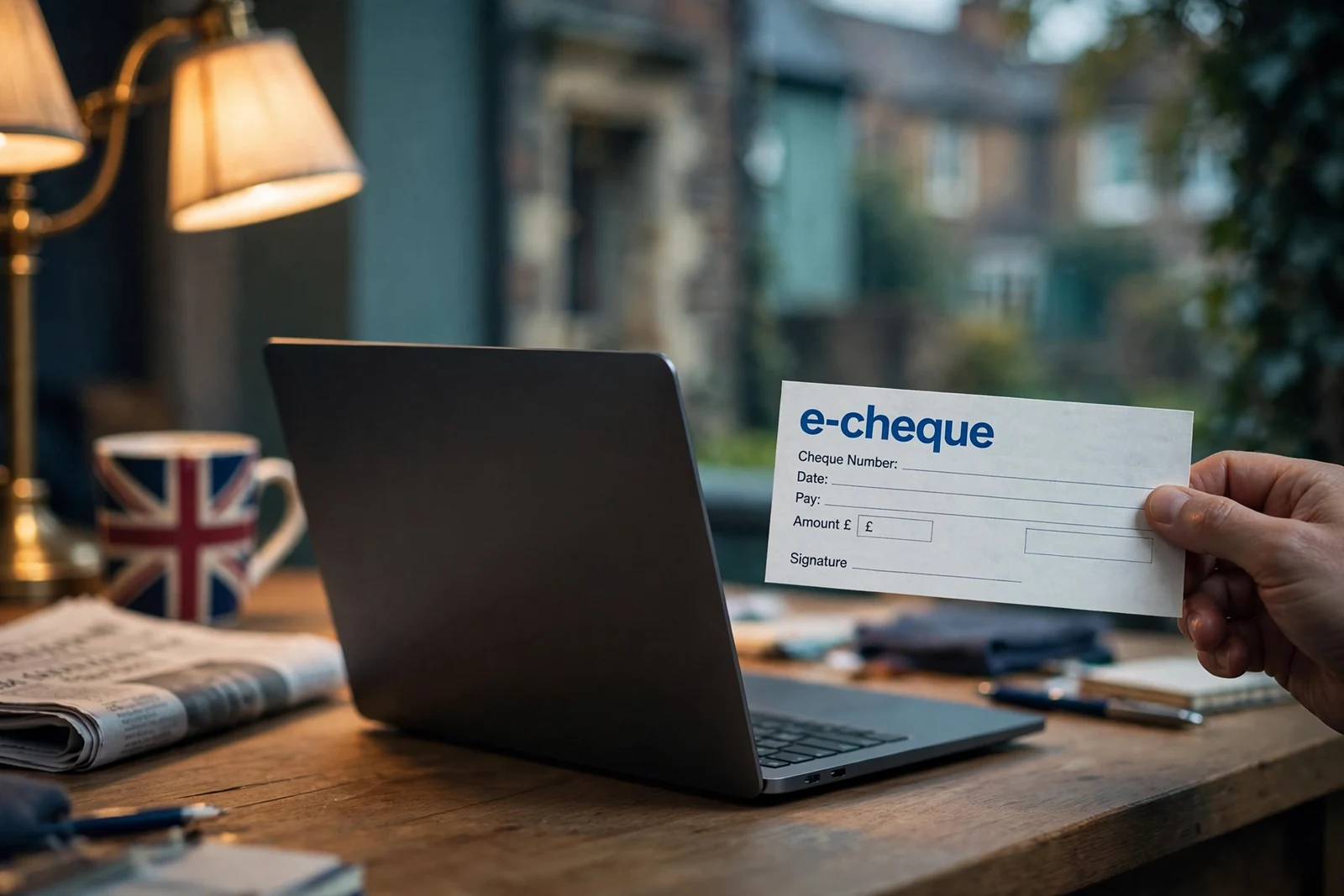
If you are looking for casinos that accept e-cheques in the UK, the first thing to check is not the headline, badge or payment logo on a review page. Open the casino’s cashier.
That sounds obvious. I still got caught by it. A payment method can appear in an article, a comparison table or an old promotional page and still be absent from the account I was actually using. “Accepts e-cheques” sounds definite. In practice, it may only describe a historical option, a payment route available in another country, or a method shown on a general list rather than enabled for every customer.
The cashier is where the useful answer starts.
Why a payment label can mislead
Payment information changes. A remote gambling licensee can alter the methods shown to customers, remove a provider, restrict a route by location, or display different options after you sign in. A page written to cover casino payments broadly may not reflect the options presented to a UK account at the moment you want to deposit.
There is also a difference between mentioning a method and supporting it for your account. A site may have an e-cheque reference somewhere in its payment information, while the cashier offers no matching button. Another page might group several countries together, even though the available payment routes are not identical in each market.
Casinos That Accept EntroPay in the UK
That is why I would not treat a list of “e-cheque casinos UK” as a confirmed list of casinos where you can make an e-cheque deposit. The wording may be useful as a starting point, but it is not evidence that the method is live for you.
A specialist review can list Visa and Mastercard among the payment methods associated with the sites it examines. That still does not settle current UK availability or whether a particular card product is eligible. The cashier has the more relevant answer.
What to look for after signing in
Create or open your account, complete any required age checks, and go to the deposit section before deciding that the casino supports e-cheques. Look for the actual payment tile, button or menu entry. Read the wording beside it rather than relying on a logo alone.
The useful signs are practical:
- the method is visible in the cashier;
- the deposit form opens when selected;
- the instructions identify what information you need to provide;
- the route is presented for your account and location;
- the casino explains any conditions attached to that payment option.
If the cashier does not show e-cheques, I would not assume that customer support can activate them manually. You can ask, of course, but wait for a clear answer before treating the method as available. A vague reply such as “we support many payment options” does not confirm that this particular route is open to your account.
I also check whether the payment name is being used precisely. “Bank payment”, “electronic cheque”, “e-cheque” and an unfamiliar provider label may not mean the same thing. Do not guess from a similar-looking icon. If you cannot tell what the route is, ask the casino to identify it in writing through its support channel.
Do not choose from a ranking alone
Search results often use phrases such as “best e-cheque casinos” or “top online casinos accepting e-cheques”. I understand why. A short list feels easier than opening several cashiers and checking them yourself. But a ranking can create false confidence when the underlying payment information is not current.
“Best” is especially slippery here. It might refer to the number of payment methods, the design of the site, a reviewer’s general opinion or an old description of e-cheque availability. None of those points proves that you can make a deposit through e-cheque today.
I would use an article or review to identify possible operators, then verify each one directly. That means checking the UK-facing site, signing in where required and opening the cashier. If the method is missing, cross that casino off the list instead of trying to make the page fit the result you wanted.
This approach also prevents a common mistake: confusing a casino’s general payment page with the options available in its live account interface. Public information can lag behind the cashier. The cashier can also show a method that is not mentioned prominently elsewhere.
DO
- Open the casino’s cashier to verify the payment method.
- Confirm the method is visible and the deposit form opens.
- Ensure the account currency matches your intended payment.
DON’T
- Rely solely on payment logos or review tables.
- Assume a method works just because it is mentioned in an article.
- Assume a deposit method is also a withdrawal method.
Treat the cashier as the final check
Before entering any payment details, confirm that the casino names the e-cheque route in your own deposit area. Check that the instructions are clear and that you understand which service is handling the transaction. If the method appears only in an advert, review table or search snippet, keep it in the “unconfirmed” column.
The same rule applies when a page lists familiar alternatives. Visa and Mastercard may be mentioned in a specialist review, but the current UK option and the eligibility of your particular card still need checking in the cashier. A logo is not a promise.
I would rather spend a few minutes checking the live payment menu than discover at the final step that the method is unavailable. It is less exciting than a “top casinos” list, but it gives you an answer tied to the account you will actually use.
Start there. Not with the label.
Check the Currency and Account Details Before Paying
Finding a payment route that appears suitable is only part of the job. Before sending anything to a UK casino, I check whether the account is set up in the right currency and whether the payment details match the customer profile. That sounds dull. It is also where small discrepancies can turn a straightforward deposit into a request for explanations.
This matters whether you are considering an e-cheque service or another route shown in the cashier. The name of the method does not tell you how the transaction will be handled behind the scenes. Your casino account, payment account and personal details still need to line up.
Casinos That Accept Ethereum in the UK: What to Check
Confirm the account currency first
Look at the casino account settings before starting the payment. Do not assume that a site aimed at British players has automatically opened your balance in pounds sterling. A specialist review reports that GBP is supported on the pages it examined, but the practical point is to confirm the currency attached to your own account before the first transaction.
If the balance is set to another currency, a payment sent in pounds may involve conversion. The amount displayed by the casino may then differ from the amount you expected to see, even when the payment itself went through correctly. That is not necessarily a payment failure. It can simply be a mismatch between the currency you intended to use and the currency assigned to the gambling account.
I learned to check this before entering payment details rather than trying to work it out afterwards. Open the account or cashier area and look for the balance currency, account settings or payment information. If the display is unclear, ask the operator before paying. It is much easier to settle the question while the money is still in your bank or payment account.
Do not rely on a pound symbol alone. Check what the symbol refers to and whether the transaction screen repeats the currency beside the amount. A familiar-looking figure can still be processed differently if the account uses another currency. Read the final confirmation screen carefully before approving the payment.
Make the customer details agree
The payment account should belong to the same customer as the casino account. That means the name and other basic account information should not conflict between the two sides of the transaction. Using matching details reduces the chance that an avoidable ownership question interrupts the payment.
Attention The payment account must belong to the same customer as the casino account to avoid ownership queries.
This is particularly easy to overlook when someone has more than one bank account, e-wallet or payment profile. You might have access to an account belonging to a partner, family member or business, but access is not the same as ownership. Paying from somebody else’s account can create a discrepancy even if that person has given you permission.
I would also avoid casually switching between different versions of my name. A shortened first name, a middle name left out, or an old address may not always cause a problem, but each difference gives the operator something to clarify. Keeping the casino profile and payment profile current is the cleaner approach.
Before paying, check:
- the name on the casino account;
- the name registered with the payment provider;
- the address and other core account information;
- the currency selected for the casino balance;
- the payment account you are actually about to use.
This is not about making every screen look identical for its own sake. It is about removing basic mismatches before they become part of the transaction record.
Do not rush through the confirmation page
Payment screens are designed to move you towards approval, so it is easy to click through on habit. I have made that mistake myself: chosen the intended route, entered an amount, and treated the final screen as a formality. It is not. That last review is where you can catch the wrong currency or the wrong account before anything is submitted.
Check the displayed amount, currency and customer details. If the cashier identifies the payment account, make sure it is the one registered to you. If anything looks unfamiliar, stop and return to your account settings or contact support rather than guessing.
Keep the confirmation and transaction information after paying. It gives you a clear reference if the balance does not update as expected or if support asks which account details were used. This does not guarantee that every payment will be accepted, but it makes the basic facts much easier to establish.
Casinos That Accept USDC in the UK: What to Check
Treat a mismatch as a stop sign
A currency mismatch is a reason to pause, not something to ignore because the payment method itself looks familiar. The same applies when the available payment account is not in your name or when the personal details differ substantially from those on the casino profile.
Correct the account information first, then return to the cashier. If you are unsure whether a particular difference matters, ask the operator to explain what must be updated. I would rather spend a few minutes checking than send money through an account that may later require clarification.
The simple rule is this: use the currency you intend to hold, and use payment details that belong to the same customer. Fewer loose ends.
A Fast Deposit Does Not Mean a Fast Withdrawal
The moment money appears in your casino balance is not the same moment a payout begins moving towards your bank account. I learned that distinction the irritating way: a deposit can look complete almost immediately, while a withdrawal still has to pass through several stages before it leaves the operator.
Deposits and withdrawals are different processes. A fast deposit does not guarantee that a withdrawal will be processed at the same speed.
That matters when you are comparing casinos associated with e-cheques, whether you are using a phone or a desktop. The payment label tells you how money may enter the account; it does not, by itself, tell you how quickly a payout will arrive. A deposit route and a withdrawal route can have very different handling times, even when they sit in the same cashier.
Deposits and withdrawals do different jobs
A deposit is generally an instruction to add funds to your gambling balance. Once the payment provider confirms it, the casino can show the money as available. The casino is not necessarily making a final decision about your account at that point.
A withdrawal is different. It is a request for the casino to release funds, so the remote gambling licensee may need to review the request before sending it onwards. The account, the transaction and the required verification checks can all form part of that review. Until approval is complete, the payment may still be shown as pending rather than being in transit.
This is why a smooth deposit should not be treated as evidence that a withdrawal will be just as quick. The two actions may use different processing steps. Simple, but easy to forget.
Casinos that accept Tether in the UK: payment checks
A specialist review describes the contrast clearly: a card deposit may reach the balance instantly, whereas the corresponding payout can take several business days. That is a timing comparison, not a promise about every casino or every payment method. It also does not establish that an e-cheque route, where displayed, will match the speed of a card transaction.
The casino’s approval comes first
When you request a payout, the casino may need to approve it internally before the payment provider gets involved. That internal stage is part of the withdrawal processing time. The clock for receiving money is therefore not necessarily the same as the time shown when you click the deposit button.
A specialist review also notes that first withdrawals can take longer while verification is completed. This does not mean that every first request will face the same delay, or that a later request will always be immediate. It means your first payout may involve checks that were not visible when the deposit was accepted.
In practical terms, the balance can show three different points in the journey:
- The deposit is credited — the money appears available for play.
- The withdrawal is requested — you have asked the casino to release funds.
- The payout is approved and sent — the operator has completed its part and the payment is moving through the relevant route.
Those are not interchangeable statuses. I now read “instant deposit” as a statement about the first point only. It says nothing definite about the second or third.
Verification can affect the first payout
Account verification is especially important when money is leaving the casino. A remote gambling licensee may need to complete checks before approving a withdrawal, and the first request can therefore take longer than a later one. The exact experience depends on the operator’s process and the state of the account.
This is also why it is unhelpful to judge a casino solely by how quickly it accepts a payment. The cashier may confirm an incoming transaction without showing whether the account is ready for a payout. If verification is still outstanding, the withdrawal may pause while the casino completes its review.
I would check the account area before depositing, not after requesting money back. Look for any notification asking for verification and make sure you understand whether the account is ready for withdrawals. That keeps the timing issue visible instead of discovering it only when a payout is already pending.
Check verification status
Verify your account is ready for withdrawals before you deposit money.
What to expect from an e-cheque reference
If a casino page or review mentions e-cheques, treat that as a description of a possible payment route rather than a timetable. The important timing question is not just how the funds are deposited. It is whether the cashier shows a withdrawal option and what processing information the operator gives for that direction.
Even then, separate the casino’s internal approval from the provider’s delivery stage. The operator may approve a request, but the payout can still need time to travel through the payment system. Conversely, a fast provider cannot remove a delay caused by an unfinished casino review.
That is the part promotional wording tends to flatten into one word: “fast”. What it really means depends on which stage is being described.
Read the status, not the slogan
When checking a potential payment route, note the wording used for deposits and withdrawals separately. “Instant” beside a deposit button should not be read as “instant payout”. A pending withdrawal may simply be waiting for internal approval or verification, rather than indicating that the payment has failed.
I have stopped treating speed claims as a single promise. First, the money has to reach the account. Then the withdrawal has to be requested, reviewed and approved. Only after that does delivery become the relevant part of the wait.
Different stages. Different clocks.
Deposit Limits Can Change With the Payment Method
The amount you can deposit is not always determined by the casino account alone. The selected payment method can have its own minimum and maximum, while your account status may affect the limits shown to you. That matters if you are looking at an e-cheque route and assuming the same figures would apply to a debit card, bank transfer or e-wallet.
They may not.
Deposit limits
Minimum deposits can vary between £10 and £20 depending on the method. Always check the cashier for the specific limits applicable to your account.
A specialist review places the minimum deposit at between £10 and £20, depending on the payment method selected. Treat that as a guide rather than a figure to rely on for a particular casino. The cashier is the part that matters: it should show the minimum accepted for the method currently available on your account.
That minimum can make one route unsuitable for a small deposit even when another option would accept it. Conversely, a method that looks suitable for a larger payment may impose a lower transaction ceiling. Before entering payment details, select the method and check the amount field, the displayed minimum and any maximum shown beside it.
Three kinds of maximum to check
A payment limit can apply at different levels:
- Per transaction: the largest amount accepted in one deposit.
- Per day: the total you can deposit through that method during a day.
- Per month: the cumulative amount allowed over the monthly period used by the operator.
These are not interchangeable. A method might accept the amount you want to send in one transaction but still be affected by a daily or monthly account limit. Splitting a payment does not necessarily remove those restrictions, because the casino or payment provider may count the combined deposits.
Account status can also affect what is available. A newly opened or partly verified account may not display the same limits as an established account. That does not mean you should try to work around a restriction by switching methods or dividing the deposit. It means the figures need to be read in the context of your own account.
What to check before choosing e-cheque
If an e-cheque option appears in the cashier, look for the minimum and maximum beside that method rather than relying on a general payments page. A page describing payment methods may not reflect the options currently enabled for your account, and it may not show the same transaction limits.
Check these points in order:
- Confirm that the e-cheque option is actually available in your cashier.
- Read the minimum deposit attached to it.
- Look for a per-transaction maximum.
- Check whether a daily or monthly ceiling is displayed.
- Compare those figures with the amount you intend to deposit.
- Recheck the final payment screen before approving the transaction.
If the cashier does not make a limit clear, contact the casino before sending money. Keep the question narrow: ask for the current minimum and the applicable transaction, daily and monthly maximums for your account. Written confirmation can be useful if the figures shown later do not match what you were told.
The same check applies to any alternative route. Debit cards, bank transfers and e-wallets can present different limits, and the account may show different rules after its status changes. I have learned not to choose a payment method because it sounds familiar or appears in a general list. The useful detail is the limit attached to the exact method, at the moment you are ready to deposit.
Check the figure first. Then pay.
Compare the Full Cost, Not Just the Visible Fee
When I compare a payment route for an e-cheque casino in the UK, I do not stop at the cashier’s headline fee. That figure may be only one part of what leaves your account. A payment can also involve a charge from the casino, the payment provider, your bank or card issuer, a currency-conversion spread, and network costs.
Potential Costs
Casino fees, provider fees, and bank charges
Conversion Risk
Currency exchange rate spreads
Verification
Required for first payouts
The awkward part is that these charges may appear in different places. The casino might show its fee before you confirm the transaction. A provider could apply its own charge separately. Your bank may treat the payment as an international or non-standard transaction, depending on how it is processed. If the amount is converted between currencies, the exchange rate used can matter more than the obvious flat charge.
That last point caught me out before. I saw a payment method advertised as having a small fixed cost and assumed it was the cheaper choice. The displayed fee was clear; the rate used for conversion was not. A specialist review I checked also warned that the conversion spread can outweigh a visible flat fee. The lesson was simple: look at the amount that will actually leave your account, not just the label beside the payment button.
What to compare
For the exact amount you plan to send, check:
- any casino charge shown in the cashier;
- the payment provider’s fee;
- possible bank or issuer charges;
- the exchange rate and any spread;
- network costs connected with processing the payment.
Do not compare methods using a fee copied from a general payment page while ignoring the transaction screen. Charges can depend on the route, currency and provider used. The relevant comparison is the total cost for your own payment, in your own account currency.
There is no universal cheapest option. A method with no visible casino fee may still cost more after provider charges or conversion. Another route with a stated charge may work out better once all costs are included. I would also avoid assuming that a payment described as an “e-cheque” has one standard price across every casino or provider. The name alone tells you very little about the final cost.
Before confirming, review the summary carefully and keep a record of the amount sent, the currency and any fee shown. If the cashier does not make the total clear, that is a reason to pause rather than guess. Small print matters here.
Other Payment Routes You May See in the Cashier
When I open a casino cashier, I expect the payment menu to be less tidy than the promotional page. One site may show a familiar card option, while another puts bank-based payments or a digital wallet first. That does not make one route universally better, and it certainly does not turn a mention of e-cheques into a confirmed list of casinos accepting them.
Casinos That Accept MuchBetter in the UK
The most familiar alternatives are debit cards. UK casinos commonly accept Visa and Mastercard debit cards, although the available card products still need to be checked in the individual cashier. That detail matters because a payment symbol on a general information page is not the same as an active option on your account.
Credit-card payments for gambling are not permitted at UK-licensed casinos. The same restriction also covers credit-card funding routed through a money service business. I have learned not to treat every card-shaped option as interchangeable. Check that the payment is being made from an eligible debit card, not from a prohibited credit facility.
Bank-based routes can also appear under different labels. Open banking and bank transfers are described in a specialist review as capable of providing instant deposits and fast withdrawals at many sites. That is a description of what may be available, not a promise about every cashier. The bank name, the service used and the direction of the transaction can all depend on the particular remote gambling licensee.
Apple Pay is another option you may encounter. Some UKGC-licensed casinos accept it for deposits, but its presence at one site does not establish availability elsewhere. Nor should seeing an Apple Pay button be treated as proof that every possible transaction works through it. The cashier is still the place to confirm what the operator supports.
A wallet may be listed alongside cards and bank payments, but its appearance alone tells you little about the exact arrangement. UK-licensed casinos cannot accept wallet payments where the wallet allows credit-card funds to be used for gambling. That makes the funding route relevant, not just the wallet’s brand name.
Debit Cards
Commonly accepted via Visa and Mastercard, but must be debit rather than credit.
Bank Transfers
Often provides instant deposits and fast withdrawals via open banking.
Digital Wallets
Available at many sites, but must not allow credit-card funding for gambling.
So, when comparing alternatives to an e-cheque, I would note the methods actually displayed after logging in rather than copying a broad payment list. Debit cards, bank-based services and Apple Pay may all be seen in British casino cashiers, but availability is account- and operator-specific. The menu is the evidence. Everything else is background.
Keep the Deposit and Withdrawal Route Consistent
When I was trying to keep a casino payment simple, my best rule was to use one named account for both directions whenever the cashier allowed it. The same account used for the deposit and withdrawal made the route easier to follow: money went in from one place, and the payout request pointed back to that same place. Less guesswork, fewer loose ends.
That matters when you are looking at an e-cheque-style option and comparing it with a bank route. The label alone does not tell you how the casino will handle a later withdrawal. Before sending money, look at the cashier’s instructions for the selected method and check whether the same named account can receive funds back. If the route changes between deposit and withdrawal, the process can become harder to track.
Bank transfers bring another layer of timing that is easy to overlook. A specialist payment review notes that delivery can depend on the bank’s cut-off time, weekends and any currency conversion. A transfer entered after the relevant cut-off may not move until the next processing window. A weekend can add more waiting, while conversion can introduce another stage between the casino and your bank.
I once treated “sent” as meaning “in my account”. It did not. The casino may have released the payment, but the banking side still had its own timetable.
Casinos That Accept Neteller in the UK
So, if you choose a bank transfer, keep the account details consistent, allow for banking schedules, and check whether the account currency matches the route you selected. With any payment method, including one described as an e-cheque option, a single named account used consistently is often the clearest way to manage deposits and withdrawals.
Deposit-Only Options Are Not a Complete Payment Route
A payment button can look useful because it lets you put money into a casino account. That still tells you only half the story. Before relying on any method, I check whether the same route can also receive a withdrawal, or whether it is marked deposit-only.
Paysafecard is the clearest example. It is a prepaid voucher intended for deposits, not for receiving casino payouts. You can use it to fund an account, but you should not treat it as a complete deposit-and-withdrawal solution. If you are looking at casinos that accept e-cheque deposits in the UK, apply the same check: an e-cheque label or deposit instruction does not automatically mean withdrawals can be sent back that way.
The cashier should show the available direction for each method. Look for separate information about deposits and withdrawals rather than assuming that one automatically includes the other. If the withdrawal page offers a different route, check that before depositing. Otherwise, you may end up having to provide another payment account and complete additional checks when you want your balance paid out.
There is also a practical reason not to choose a deposit route in isolation. UK anti-money-laundering controls generally mean that a payout is returned to the original payment source. That can make a deposit-only voucher unsuitable as the main route for your casino funds, even when the initial payment works without trouble.
Withdrawal readiness
- Confirm the payment route supports withdrawals
- Ensure the account is fully verified
- Check that the destination account is in your name
I have made the mistake of judging a method by the first successful deposit. The awkward part came later, when the cashier offered no matching withdrawal option. Two minutes of checking both directions would have saved that hassle.
Deposit first, investigate later? Bad order.
Why Payment Ownership Checks Can Slow a Payout
I used to see a payout request as a simple reversal: money goes in, money comes back out. That assumption caused me trouble. A casino may first check whether the payment account belongs to the person who holds the gambling account. This is not just paperwork. Returning funds to the original payment source is a common anti-fraud and anti-money-laundering control.
That matters when you deposit with an e-cheque, card, bank service or wallet and later request a withdrawal through a different route. The casino may not treat the alternative as an automatic substitute. It can ask why the destination changed, who owns it, and whether the account details match the customer record. If the answers are not clear, the payment may pause while the operator carries out further checks.
I have also learned not to read “alternative withdrawal method” as “no questions asked”. A different route can require extra verification, such as evidence connecting the payment account with you. The exact documents and checks depend on the operator and the circumstances, so the cashier’s payment terms matter more than a broad claim about the method.
Approval is another part of the delay. A specialist review notes that withdrawal speed is affected by the casino’s own approval procedure and by whether the player’s account has completed verification. That means ownership checks can hold up a payout even when the payment provider itself is capable of moving the money quickly. Fast provider, slow review.
Casinos That Accept Boku in the UK: What to Check
Before requesting funds, I would check the withdrawal instructions and keep accessible records of the payment account used. I would also avoid assuming that an e-cheque route, or any other deposit route, automatically gives me a matching payout option. The operator may need to return funds to the source first, while an alternative could trigger additional questions. That is less convenient, but it is part of how payment ownership is controlled.
Set a Limit Before You Deposit
Before you put money into a UK casino account, look for the financial-limit prompt. Remote gambling operators licensed by the UK Gambling Commission must ask new customers to set a limit before the first deposit. This applies whether you are considering an e-cheque-style payment route or another option shown in the cashier.
I used to treat that screen as another box to click through. That was a mistake. It is the point where you decide what level of spending is acceptable before the balance, bonuses or a losing session start influencing the decision. Set the limit while your thinking is clear, not after you have already deposited.
Casinos That Accept Interac in the UK: What to Check
The exact controls can differ between account areas, but UKGC-licensed operators must provide accessible account-level limit controls. Look in the account or responsible-gambling section if the prompt is not immediately visible. Keep a note of what you selected, especially if you use more than one payment method: the control belongs to the gambling account, not to a particular card, wallet or bank route.
Do not confuse this financial limit with a payment method’s transaction ceiling. A cashier can impose its own minimum or maximum, while your account limit is a separate control over your gambling spend. Both may affect whether a deposit goes through, but they serve different purposes.
If the setting feels too restrictive, that is useful information rather than a technical problem to work around. I would leave it in place and reconsider the deposit instead of hunting for another route. Payment branding can make a method sound like the important choice; the account limit is the part that puts a boundary around the decision.
Set it first. Deposit second.
Why can a fast payout casino still delay my withdrawal?
A quick payment method does not skip the casino’s approval process. Withdrawals can take longer while your account is being verified, particularly for a first withdrawal.
Why must withdrawals return to the deposit method?
Returning funds to the original payment source is a common anti-fraud and anti-money-laundering control. Using another route may mean you need additional verification.
Can I use a credit card at 333 Casino in Great Britain?
No, credit cards cannot be used for gambling at UK-licensed casinos. The UK ban took effect on 14 April 2020 and remains in force.
Is Skrill available?
Yes, Skrill is offered at some UK-friendly casino sites and remains a common deposit option. Check your casino’s cashier to see whether it is available for your account.
What is the fastest withdrawal method for UK casinos?
PayPal, open banking services and debit cards linked to fast payout systems are generally among the quickest options. Actual speed also depends on casino approval and whether your account is verified.
Are fast casino withdrawals guaranteed?
No. Withdrawal speed depends on the casino’s approval process and your verification status, as well as the payment method.