

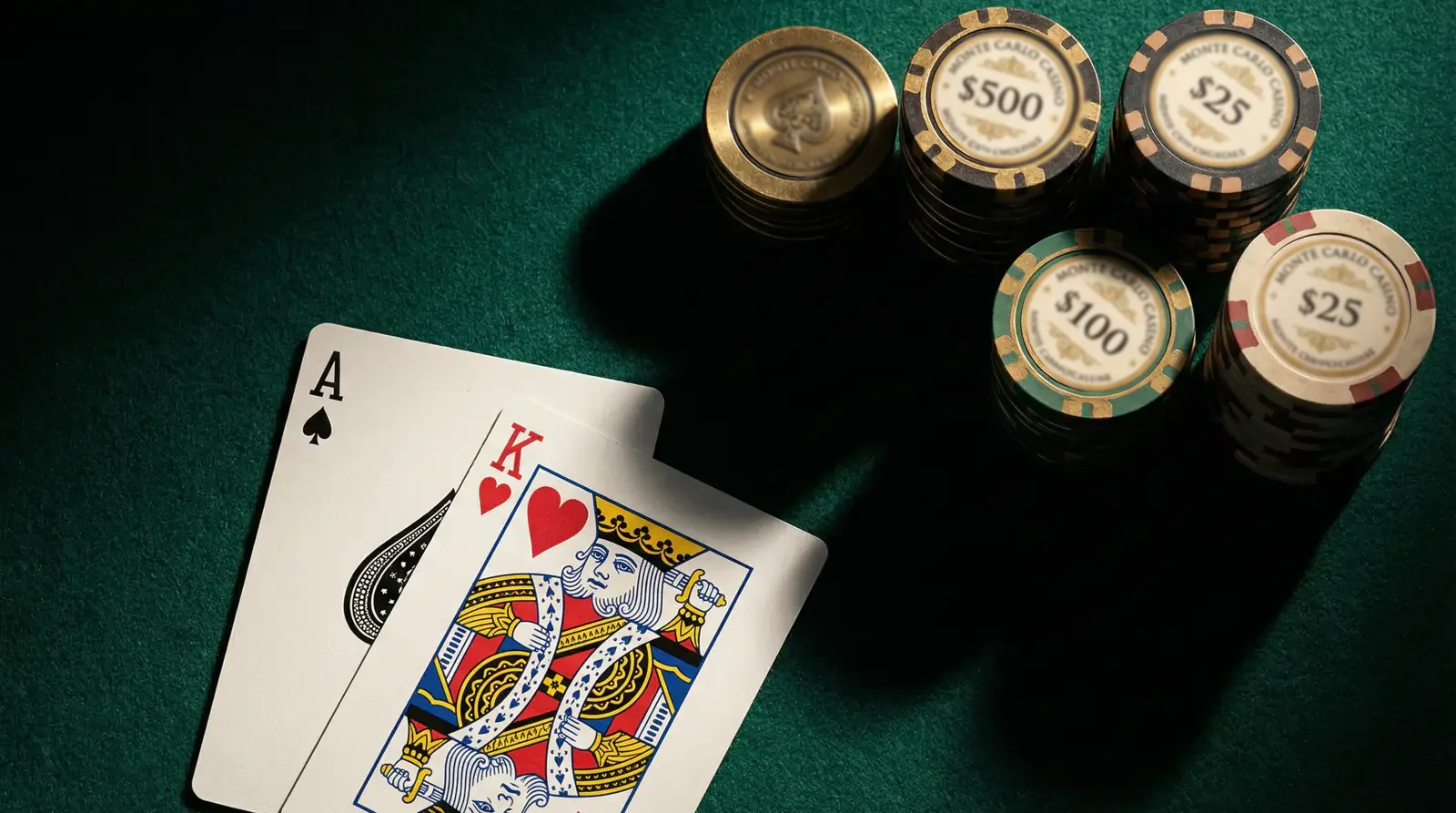
The Game Where Rules Shape Your Odds
Blackjack offers some of the best odds in any casino when played correctly at favourable tables. House edges below 0.5% are achievable with optimal strategy at player-friendly rule sets. However, the same game with different rules can carry house edges several times higher. Understanding which rules help and which hurt enables informed table selection.
Rule variations between blackjack tables create meaningful differences in expected returns. A seemingly minor change like blackjack payout ratios can swing house edge significantly. This guide examines how blackjack house edge works, which rules matter most, and how to identify the best blackjack games at UK casinos.
Understanding Blackjack House Edge
House edge represents the casino’s mathematical advantage expressed as a percentage of wagered money. A 0.5% house edge means the casino expects to retain £0.50 per £100 wagered over time. Blackjack’s relatively low house edge compared to most casino games makes it attractive for players seeking value.
The base house edge assumes perfect basic strategy execution. Deviating from mathematically optimal decisions increases effective house edge beyond published figures. A game with 0.5% theoretical house edge might perform at 2% or higher for players making suboptimal choices. Published house edges represent best-case scenarios for skilled players.
Blackjack house edge derives from the dealer acting last. Players who bust lose immediately regardless of whether the dealer subsequently busts. This structural advantage for the house gets partially offset by player-favourable rules like blackjack bonuses and doubling options. The balance between these factors determines net house edge.
Variance in blackjack runs lower than many casino games due to frequent decisions and relatively even outcomes. Session results more reliably reflect theoretical expectations compared to high-volatility alternatives. This predictability appeals to players who prefer steady play over dramatic swings.
Rule Variations That Affect House Edge
Blackjack payout ratios create the largest single impact on house edge. Traditional 3:2 payouts for blackjack return £15 on a £10 bet. Many modern tables pay only 6:5, returning just £12 on the same bet. This reduction increases house edge by approximately 1.4%, transforming a player-friendly game into a mediocre proposition. Avoiding 6:5 tables represents the most important rule consideration.
Number of decks affects house edge modestly but meaningfully. Single-deck blackjack offers approximately 0.15% lower house edge than eight-deck games, all else equal. However, casinos often compensate with less favourable rules on low-deck games. Evaluating the complete rule set matters more than deck count alone.
Dealer standing rules on soft 17 influence outcomes. When dealers must stand on soft 17, house edge decreases by about 0.2% compared to tables where dealers hit soft 17. The additional dealer busting opportunities when standing benefit players. Seeking tables where dealers stand on soft 17 improves expected returns.
Doubling restrictions limit player advantage opportunities. Tables allowing doubling on any two cards provide more favourable situations than those restricting doubles to specific totals like 9, 10, or 11. Doubling after splits similarly adds value when permitted. Fewer restrictions on doubling reduce house edge.
Surrender options provide valuable escape routes from unfavourable situations. Late surrender allows forfeiting half your bet after dealer blackjack check. Early surrender, rare but valuable, permits surrender before dealer checks. Surrender availability reduces house edge by enabling mathematically correct folds.
Splitting rules affect strategy options. Allowing resplitting of pairs, including aces, benefits players. Restrictions on splitting or resplitting increase house edge. Tables permitting maximum splitting flexibility provide better player value.
Finding the Best Blackjack Games
Classic blackjack with traditional rules offers the best baseline experience. Look for 3:2 payouts, dealer stands on soft 17, doubling on any two cards, and late surrender. This combination achieves house edges around 0.4% with perfect strategy. Such favourable rule sets exist at quality UK casinos, though they may require searching beyond default table offerings.
Single-deck blackjack can offer excellent odds when rules remain favourable. The reduced deck count improves player odds slightly. However, many single-deck games impose 6:5 payouts or other restrictions that eliminate deck-count advantages. Evaluating complete rules matters more than deck count marketing.
European blackjack differs from American variants in dealer card handling. Dealers receive only one card initially, taking the second after players complete decisions. This procedural difference does not significantly affect house edge with proper strategy adjustment. European rules often appear at UK online casinos alongside American-style games.
Blackjack variants with side bets should be evaluated carefully. Side bets like Perfect Pairs or 21+3 carry significantly higher house edges than the main game. Playing these side bets increases overall expected losses even while enjoying the base game. The entertainment value of side bets comes at mathematical cost.
RTP information for blackjack games should appear in game rules. UK regulations require this disclosure. Checking stated RTP helps compare options, though understanding which rules create the stated percentage provides deeper insight than RTP numbers alone.
How Basic Strategy Affects Your Edge
Basic strategy provides mathematically optimal decisions for every possible hand situation. Following these predetermined choices minimises house edge to its theoretical minimum. The strategy accounts for your cards, dealer upcard, and specific table rules. Deviation from basic strategy increases the casino’s advantage.
Learning basic strategy requires memorising decision charts or using reference materials. Charts display correct actions for each hand combination. Smartphone apps provide convenient lookup during online play where speed pressure is minimal. Investing time in strategy mastery pays dividends across all future blackjack sessions.
Common strategy mistakes include standing on soft 17 against weak dealer cards, not doubling advantageous situations, and making insurance bets. These errors each cost fractions of a percent that compound over extended play. Eliminating common mistakes captures most of basic strategy’s value.
Perfect strategy execution proves difficult over extended sessions. Fatigue, distraction, and emotional reactions cause occasional suboptimal decisions. Accepting some deviation while minimising its frequency achieves practical results. Even imperfect strategy application dramatically outperforms intuitive play.
Live Dealer Versus RNG Blackjack
RNG blackjack offers faster play with more hands per hour. The software format allows deliberate strategy consultation without social pressure. Lower table minimums at many RNG games suit smaller bankrolls. For volume play or strategy practice, RNG blackjack provides practical advantages.
Live dealer blackjack delivers authentic casino atmosphere through video streaming. Real cards and human dealers create social experience absent from software games. Table limits typically run higher than RNG equivalents. Players valuing atmosphere and authenticity over pure efficiency prefer live formats.
House edges between formats depend on specific rules rather than delivery method. A live table with 6:5 payouts carries worse odds than an RNG game paying 3:2. Comparing rules matters more than choosing between live and digital. Both formats can offer excellent or poor value depending on specific game configuration.
Blackjack House Edge Questions
Players ask whether card counting works online. It does not effectively. Online blackjack shuffles after each hand or uses continuous shuffling that eliminates counting advantages. Card counting requires physical deck penetration between shuffles, which online formats do not provide.
Questions arise about whether casinos change rules mid-session. They cannot alter active game rules during play. However, casinos can update games between sessions. Checking rules each time you play confirms conditions match expectations.
Some players wonder about blackjack betting systems. No betting system changes the house edge. Systems like Martingale affect variance and risk patterns but cannot overcome mathematical casino advantages. Focusing on rule selection and strategy execution provides more value than betting system exploration.
Find more casino guides at trustedcasino-uk. Also read our casino odds and payouts.